Oldest Buddhist apsidal temple of country found in Swat


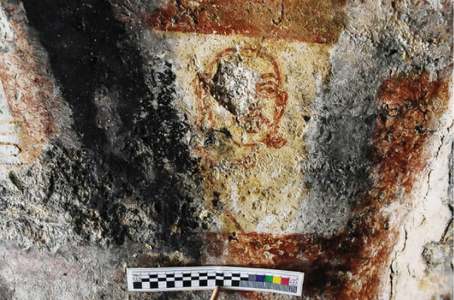
SWAT: The archaeologists have discovered the most ancient Buddhist apsidal temple of Pakistan in Bazira area of Barikot tehsil in Swat.
The site was discovered by archaeologists of Ca’ Foscari University and Italian Archaeological Mission in collaboration with the provincial department of archaeology and museums.
Italian Ambassador to Pakistan Andreas Ferrarese told Dawn that he was excited that the new discovery was also made by Italian archaeologists.
“It is so impressive to find something common between the archaeology of Pakistan and that of Italy. It is something that shows that even in antiquity we have a kind of globalisation where people had exchange of certain techniques and ideas of culture and religions which is astonishing. The more we search for the past, the more we find that we have future together,” he said.
According to Prof Luca M Olivieri, the director of Italian Mission, it is possible to date the foundation of the Buddhist sacred structure to the Mauryan period, certainly to the 3rd century BC.
Italian Mission director Prof Luca M Olivieri says the sacred structure dates back to the Mauryan period
This was followed by a major reconstruction undertaken in the 2nd century BC.

When the Greeks arrived and refortified the city of Bazira, known to them from the times of Alexander the Great, they found an existing structure constructed during the Mauryan period at the time of Ashoka.
Since then, after the rule of King Menander in the mid-second century, the monument was enhanced and kept in function for centuries till the third and fourth century when it was eventually abandoned, as the Kushan city of Bazira was razed by an earthquake.
“This is an astonishingly important discovery as it attests a new architectural shape of Buddhist structure in Gandhara. We only have one other example of apsidal temple in a city at Sirkap, Taxila.
“However, the apsidal temple of Bazira is so far the earliest example of this architecture in Pakistan,” said Prof Luca.
He said that the new discovery was revolutionary because it was proving the presence of Buddhists since the third century in Swat.
The discovery also confirms the claim that Indo-Greek ruler Menander and his successors supported Buddhism.
The archaeologists unearthed not only a well-preserved four-metre high monument, the apsidal temple, but also one of the main streets of the ancient city leading eventually to the discovery of one of the gates of the city.
“We have found coins, among which a silver specimen issued by King Menander, an onyx-made seal decorated with a Hellenistic intaglio depicting the image of a youth in Greek attire with a Kharosthi inscription, a monumental Kharosthi epigraph, many other Kharosthi inscriptions on pots, and potsherds belonging to the Indo-Greek cultural horizon such as fish
plates and polished black pottery that imitates Attic models,” said Dr Michele Minardi, another Italian archaeologist.
The site has been plundered by illegal excavators between 2008 and 2010. If it was not plundered, the scientific output would have been even more important, said the archaeologists.
Dr Abdul Samad Khan, the director archaeology, said that the new discovery was important in different ways, especially in connection with religious harmony, tolerance and multiculturalism in Gandhara period.
“The entire province and Swat are extremely rich in archaeological treasure. So far, archaeologists have only explored about five per cent sites and the remaining 95 per cent are still unexplored,” he told Dawn.
Published in Dawn, December 20th, 2021