Pakistan's borders are secure, armed forces prepared to meet any situation: COAS

Army Chief Gen Qamar Javed Bajwa on Monday affirmed that Pakistan's borders were secure despite the challenges the country faces and that the armed forces were "prepared to meet any situation".
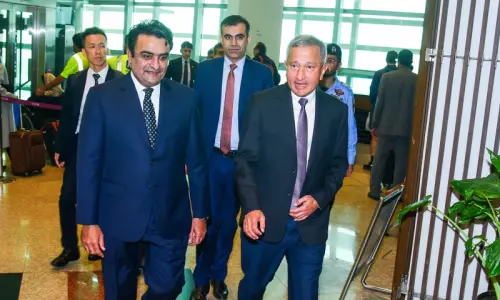
He made the comment during a briefing given to members of the Parliamentary Committee on Kashmir, the Senate Standing Committee on Defence, and the National Assembly Standing Committee on Defence during their visit to the General Headquarters (GHQ).
In a statement, the Inter-Services Public Relations (ISPR) said the parliamentarians had an "exhaustive interactive session" with the army chief and were briefed about the security situation along the country's borders as well as the Pakistan Army's efforts for peace and security.
Read | Pakistan side of Afghan border is secure: DG ISPR
During the briefing, Gen Bajwa said the armed forces, with the support of the nation, have "achieved unprecedented successes" in the fight against terrorism and in bringing normalcy to Pakistan.
Due to "timely steps" taken by the armed forces for management of the western border zone, Pakistan's borders were secure despite challenges, the statement quoted the army chief as saying.

The chief of army staff also underscored the importance of restoring peace in war-torn Afghanistan for sustainable development of the South Asian region.
He also reaffirmed Pakistan Army's support to the Kashmir cause and the people of Indian-occupied Kashmir, according to the statement by the military's media affairs wing. "The world must know that without peaceful resolution of [the] Kashmir issue, peace and stability will remain elusive," he said.
The briefing ended with the "resolve to continue struggle against violent extremism through a synergetic, whole-of-the-nation approach", the ISPR statement said.
It was the first security briefing given by the military authorities to parliamentarians since the Taliban took over Afghanistan and the deadly terrorist attacks carried out by the militant Islamic State group in the neighbouring country.
A similar briefing was given to parliamentary leaders of political parties at Parliament House on July 1 during which military and intelligence leaders had called for avoiding divisive politics on issues of national interest, and cautioned that strategic challenges and related policy shift in external relations could have repercussions for the country.
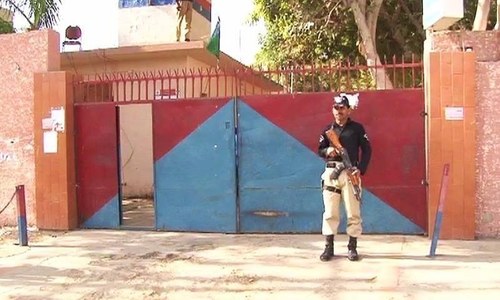
The most recent briefing came a day after three security men and two civilians were martyred in firing from the Afghan side of the border and IED (improvised explosive device) attacks in different areas of the merged districts.
Terrorists from inside Afghanistan opened fire on a military post in Bajaur district on Sunday. Troops responded in a befitting manner. According to intelligence reports, two to three terrorists were killed and three to four terrorists got injured.