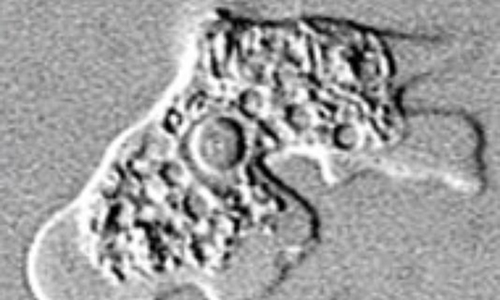
Doctor, boy fall victim to ‘brain-eating’ amoeba in Karachi


KARACHI: A neurosurgeon and a child are the latest victims of Naegleria fowleri — a rare but deadly water-borne amoeba that thrives in freshwater sources, reservoirs including poorly chlorinated water networks.
Sources said Lt Cdr Majid Ismail Chandio, a 30-year-old surgeon residing in DHA, was admitted to the PNS Shifa Hospital a few days back where he died on Sunday.
Eight-year-old Zohaib died at the Liaquat National Hospital on July 9.
Information gathered from sources indicated that Dr Chandio had no history of swimming while Zohaib had.
Earlier, two patients, both in their 30s and residents of Karachi, died of primary amoebic meningoencephalitis (PAM), the fatal infection caused by Naegleria fowleri.
Around 95pc of water samples collected from Karachi’s 50 UCs are not fit for human consumption
One of them died in mid-May and the other in the first week of June.
“Dr Chandio hailed from Dadu while Zohaib lived in Shadman Town in Karachi,” confirmed Dr Shakeel Ahmed, part of the health department’s Naegleria monitoring and inspection team notified last month, while sharing victims’ details.
Asked about actions taken by the team, Dr Ahmed said one of its jobs was to monitor water supplies and it had started collecting samples (to see that they carried desired levels of chlorine and free of other contaminants) from different areas.
95pc samples not fit for consumption
“So far, 95 per cent samples collected from 50 union councils in the city showed that they were not fit for human consumption,” said Dr Ahmed.
“Also, we have noticed water getting contaminated with sewage due to leakage in lines,” he said, adding that the the Karachi Water Sewerage Board was not willing to take responsibility for contamination in such cases.
According to Dr Ahmed, an immediate solution to contaminated (with lower chlorine levels) water supplies is that people mix two tablespoons of commonly used bleaching powder in little water, make a paste and add it in their tanks at night.
“The paste takes four to five hours to completely dissolve. This amount of bleaching powder being mixed with 500 gallons to 1,500 gallons of water causes no harm,” he said, pointing out that this method to purify water was approved by health experts.
About Naegleria fowleri and the infection it causes, Dr Samreen Sarfaraz, a senior infectious diseases expert at the Indus Hospital, said the amoeba was found worldwide in moist soil and freshwater and proliferated during summer when ambient temperature increased.
“The organism enters the nasal cavity when water contaminated with amoebae is aspirated. Subsequently, it invades the central nervous system and causes a fatal infection that clinically resembles acute bacterial meningitis,” she explained.
People urged to chlorinate water tanks
Dr Sarfaraz cited a 2011 study which reported 13 cases of Naegleria in Karachi. None of the patients had any history of aquatic activities. The research stated that infection likely occurred through ablution with tap water and that the infection’s rising cases might be attributed to rising temperatures, reduced levels of chlorine in potable water or deteriorating water distribution system.
“After this evidence, the government should have looked into the public health issue on priority and taken corrective measures including launch of a public awareness drive. But, unfortunately, nothing happened and we see precious lives being lost to an easily preventable disease,” she regretted.
She urged the general public to chlorinate their water tanks after taking advice from a public health expert and exercise caution in nasal rinsing and ablution. “There is no effective treatment for PAM. Hardly few people contracting the infection survived in the world. Hence, the focus must be on prevention.”
Published in Dawn, July 12th, 2021