Kabul on high alert amid 'deadline' for US troop withdrawal from Afghanistan


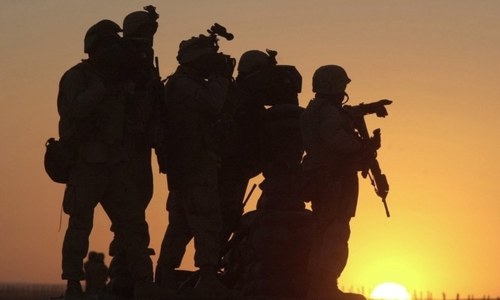
Kabul security was ramped up on Saturday as the city braced for reaction from the Taliban as US troops were still present under President Joe Biden's orders, beyond the May 1 withdrawal deadline agreed in 2020 with the Trump administration.
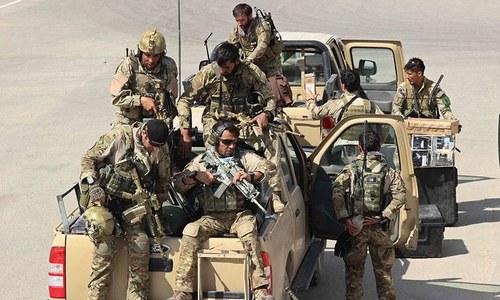
An increased military presence and security at checkpoints were visible in the Afghan capital, and a security source said the city had been placed on "high alert". Military patrols and security were being increased in main cities around the country, the source said.
Under the Trump administration's February 2020 deal with the Taliban, foreign forces were to withdraw from the country by May 1 while the Taliban held off on attacking foreign troops and bases. But President Biden announced last month after reviewing the situation that forces would stay in the country for months beyond May, withdrawing by September 11.
Violence against Afghans has escalated starkly in recent weeks, with more than a hundred Afghan security force personnel killed. On the eve of the previously agreed withdrawal deadline, a huge blast in eastern Logar killed dozens as they broke their fast during the holy Islamic month of Ramazan. It was not clear who was behind the attack.
The Taliban responded to the Biden administration's move with fiery rhetoric and threatened consequences, boycotting a crucial conference in Turkey scheduled for last month that had been planned to help jumpstart stalling Afghan peace talks in Doha.
Since then contacts have been maintained, official and Taliban sources say, in an effort to try to get the Taliban back to the negotiating table and agree to the extended foreign troop presence.
As of Saturday it was unclear whether concrete progress had been made and there had been no announcement on an extension.
Serious threats
Taliban spokesman Zabihullah Mujahid said on Twitter on Saturday that the passing deadline meant "this violation in principle has opened the way for (Taliban fighters) to take every counter-action it deems appropriate against the occupying forces."
But he added that fighters were waiting on the decision of the Taliban leadership.
Earlier in the week Mujahid told Reuters that conversations were continuing.
"Discussions between the US and Taliban and [...] within the Taliban's leadership are under way whether to extend that or not," he said.
Washington has also warned that if foreign forces were attacked while carrying out the withdrawal they would defend themselves "with all the tools at our disposal".
Experts said the Taliban threats should be taken seriously, but a number of factors meant that full-scale attacks against foreign targets could be averted, as the Taliban continued negotiations.
"We can't rule out attacks," said Michael Kugelman, deputy director of the Asia Programme at the Woodrow Wilson Centre in Washington. "That said, the Taliban is less likely to attack foreign forces now that it knows there is a specific date when they will be leaving."
Ongoing negotiations
In the lead up to May, sources said there was a flurry of meetings and negotiations continued with the Taliban to try to get them to agree to a deadline extension.
The US special envoy for Afghanistan, Zalmay Khalilzad, had met with the Taliban's head of political office, Mullah Baradar, in Doha, a Taliban spokesman said on Friday.
Also on Friday, the eve of the May 1 deadline, envoys from Russia, China, Pakistan and the United States held meetings with Taliban officials and Afghan government negotiators in the Qatari capital. The Taliban said they discussed the peace process and their request that Taliban leaders be removed from sanctions lists.
Sources also said that a delegation of Taliban political leaders had been in Islamabad this week.
Two Taliban sources and one official source said negotiations had revolved around the proposed deadline extension in exchange for the United States not getting involved in Afghan military operations against the Taliban; getting the Taliban to commit to re-joining the Turkey conference if they were provided with an agenda on what would be discussed there; and possibly declaring a ceasefire over the upcoming Eid holiday.
Pakistan's Foreign Office did not immediately respond to a request for comment.