0
0

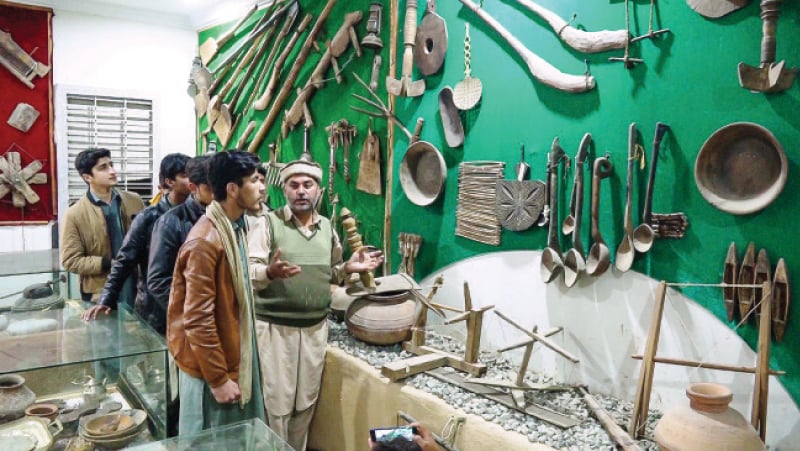
SWAT: The large number of tourists visiting Salampur in Swat prompted a resident of the village to establish a cultural museum that attracted more visitors to the area.
Amir Khaliq, owner of a handicrafts shop in Salampur village, said that many tourists and locals visited his village to buy not only handloom woolen stuff but they were also interested in local culture and traditions.
“Salampur is famous for its handloom industry where a large number of tourists come to see and buy the stuff. Most often the tourists would ask about the local culture, traditions and many other things when they would visit my shop. Their interest in local culture put an idea in my mind to establish the museum,” he told this scribe.
Mr Khaliq said that he started collecting old traditional stuff including woolen shawls, handlooms, farming tools, wooden and stone made utensils, weapons, musical instruments, costumes, shoes, jewellery, household items, decoration pieces, furniture and many other things of local cultural heritage.
Amir Khaliq says his friends and local elders helped him in collecting artefacts
“When I realised that I collected enough cultural and traditional stuff used by local Yousafzai and other tribes, I established the museum and then got No Objection Certificate from the government,” he said. He added that his museum was visited by many locals and tourists.
Mr Khaliq said that he was excited that not only tourists took interest in his museum but he managed to preserve a history of the local Pakhtuns. He said that he was grateful to his friends and elders of the area who donated the artefacts to him and helped him establish the museum.
The museum has artefacts ranging from 60 years to 700 years old while some of the items, according to him, are 2,000 years old belonging to Buddhists who lived in the area in the past.
Many locals and tourists visit the museum and take interest in the artefacts. “I heard about the museum here in Salampur so today I came here with my friends. I saw many things, which were used by our forefathers in the past but now these are not in use,” said Yasar Khan, a student who was with his friends in the museum.
He said that he found many interesting things of the daily use items and learnt about their functions.
Shah Wali Khan, an elder, who was also present in the museum, said that every artefact in this museum was a source of information for the young generation. He added that the museum presented an important chapter of history of their forefathers.
Published in Dawn, December 28th, 2020