WHO suggests lockdown in Covid-19 hotspots

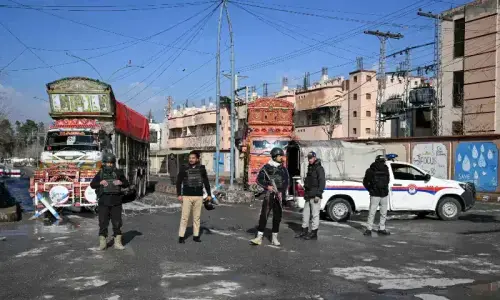
PESHAWAR: The World Health Organisation suggested imposing complete lockdown in hotspots to minimise mortalities and infections from second wave of the pandemic as coronavirus claimed lives of four people in Khyber Pakhtunkhwa.
Former deputy medical superintendent of district headquarters hospital in Mansehra Dr Mohammad Bashir and Adnan Haleem, a third year student of MBBS at Khyber Medical College also breathed their last due to Covid-19, according to Provincial Doctors Association. Both were admitted to intensive care units in Mansehra and Peshawar, respectively.
According to health department’s report, four persons died during the 24 hours, which was the highest number of deaths in a single day from the virus since July. The province recorded 226 new cases, making its overall tally of patients 41,069. The number of total recoveries stood at 38,342 after 174 more people were declared negative, said the report.
However, the number of active cases rose to 1,433 from 804 recorded a week ago. Since November 1, the province has been recording 100 cases on average per day, which surged to 260 on November 8 and 186 on November 9.
Officials said that the second wave could be more unpredictable and the only option to remain safe was strict adherence to social distancing measures, wearing face mask and hand washing, otherwise, the situation could go June’s way when the hospitals ran out of Covid-19 beds.
Virus kills four people in a single day in KP
A week ago, a total of 101 patients were admitted to various hospitals whereas the number of hospitalisation due to Covid-19 now reached 153.
Islamabad-based WHO officials told Dawn that the government was advised to enforce lockdown in the areas that were reporting Covid-19 cases as the second wave could prove more dangerous than the first one.
“We have been appreciating the government for better handling of the first wave during which fewer cases and deaths occurred as compared to the neighbouring countries in the region. But there should be no laxity and measures should be taken to deal with the present wave already started,” they said.
The officials said that they wanted the provincial government to conduct more than 6,000 tests per day as it had the potential. They said that the province had 17 laboratories to conduct the tests. They added that more testing was required to isolate the positive cases from the normal people and put brakes on spread of the ailment.
They said that other matter of concern was non-observance to standard operating procedures by people as only two per cent population wore mask in the cities. This is happening despite the government’s directives to make wearing mask compulsory.
The officials said that overcrowding bazaars, markets, wedding halls and political gatherings could lead to spike in the ailment that could become uncontrollable if SOPs were not followed. They said that situation in educational institutions also demanded adherence to SOPs.
A report of health department showed that 1,366 school inmates tested positive for Covid-19 in the province since October 15. The positivity rate in schools is increasing.
The WHO officials said that if Pakistan wanted to sustain the gains it had achieved in first wave, there was an urgent need to impose lockdown, especially in hotspot areas. There should be strict implementation of SOPs in schools because students were often symptomless but they could transmit the virus to others and vicious cycle could engulf the community, they said.
Khyber Pakhtunkhwa has a 3.15 case fatality rate (CFR). Peshawar has 5.1 per cent CFR and is among the high burdened cities in the country. National CFR is 2.02 per cent.
Published in Dawn, November 11th, 2020