Smog to worsen in Punjab, fear experts


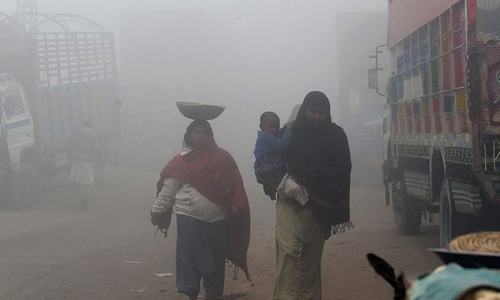
LAHORE: The smog situation in Punjab, already hovering around “unhealthy” levels, is set to worsen over the next two weeks, according to data released by the provincial environment department on Monday.
But things would improve slightly after Nov 10, the data showed.
On Monday the air quality index (AQI) in Lahore ranged between 143 and 210. The reading for other cities was even more alarming: for Faisalabad it was 295, Raiwind 286, Bahawalpur 261 and for Multan 216.
“Although alarm bells are still not ringing, they are not far off either,” an official of the Punjab environment department warned.
On Monday, New Delhi’s AQI ranged between 200 and 260, Shenyang (China) between 180 and 200 while Karachi’s index varied from 150 to 170.
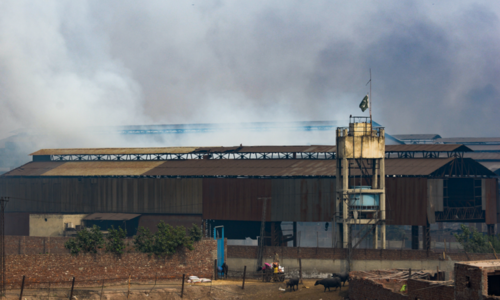
According to experts, the smog situation depends on two factors: (i) the pace of stubble burning on the Pakistan side of the Punjab border and (ii) the wind direction from the Indian side.
Stubble burning is banned in Pakistan, but not in India.
At present the wind is carrying smog from Pakistan to India, but it could change in days to come and start blowing the other way round.
The air quality index worsened more than twice the current level last year when the wind direction changed. Another alarming factor this year is going to be the absence of rain during November, if the weather assessment turns out to be correct.
“It will make the situation extremely precarious,” according to an official of the provincial disaster management authority (PDMA).
The Punjab government has already launched a crackdown on smoke-emitting vehicles and is trying to reduce the number of vehicles on roads by staggering the timing of pick and drop in public sector educational institutions.
Brick kilns using the old technology will be closed from November 7 to December 31. The closure could be prolonged if the need arises.
A working group has recommended closure of educational institutions if the AQI crosses the 300-mark.
It has also suggested that shops shut down at 7pm and marriage halls at 9pm.
Published in Dawn, October 27th, 2020