PM can appoint anyone as adviser, says IHC's Justice Athar Minallah


 20
20
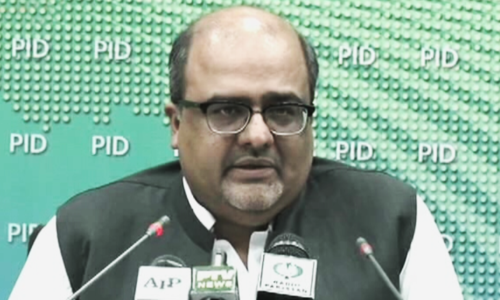

Islamabad High Court Chief Justice Athar Minallah, while hearing a case on Tuesday pertaining to the appointment of premier's aide Mirza Shahzad Akbar, noted that the prime minister can appoint anyone as an adviser as per the Constitution.
The high court chief justice was hearing a petition filed yesterday by Advocate Pervez Zahoor that challenged Akbar's appointment as a special assistant to the prime minister. The petition urged the court to declare Akbar's appointment null and void and argued that Supreme Court judge Justice Qazi Faez Isa had also questioned the aide's credentials and his appointment as SAPM on accountability.
The petition filed in the IHC further alleged that Akbar was "using political influence".
During today's hearing, Justice Minallah remarked: "If the prime minister did not appoint a qualified person as his adviser, it is his prerogative."
In his arguments, the petitioner's counsel Amanullah Kinrani argued that the appointment of unelected members was against the National Assembly's rules, at which Justice Minallah said: "Constitutionally, the prime minister can appoint anyone as adviser."
"Shahzad Akbar is part of the federal cabinet," Kinrani said.
Justice Minallah said that the IHC, in its ruling in a case pertaining to the sugar scam, had said that Akbar "cannot be a part of the federal cabinet".
The petitioner's lawyer told the court that during yesterday's sitting of the lower house, Akbar had answered questions even though federal ministers were present. He further said that according to the rules of business, accountability is an independent institution.
"What has happened now to cause fear that he (Akbar) is interfering in NAB?" the IHC chief justice inquired.
The petitioner said that that anti-corruption laws have been separated from the accountability institution, at which Justice Minallah said: "Merely naming [something] does not prove interference."
"Did he (Akbar) interfere in the matters of NAB chairman? Did he interfere in FIA? You have not presented any such thing to us."
Justice Minallah noted that the prime minister was answerable to the parliament, adding: "We should strengthen the parliament."
He further said that if the matter was related to rule of law, the petitioner should take it to the relevant bar councils.
"Lack of governance and lack of implementation of laws cause some issues," he said and added: "Instead of investing time in such matters, shouldn't we allot it to common petitioners?"
The high court reserved its verdict on the case.
Akbar is also nominated in another case, in which the appointments of 15 SAPMs have been challenged. The case is being heard by a separate bench of the IHC.