In rare call to Hasina, Imran urges closer ties with Bangladesh



ISLAMABAD: Prime Minister Imran Khan on Wednesday expressed his desire for “closer and fraternal” relations with Bangladesh.
Mr Khan, in what was his first telephone conversation with his Bangladesh counterpart Hasina Wajed, said: “Pakistan is committed to deepening fraternal relations with Bangladesh on the basis of mutual trust, mutual respect and sovereign equality.”
The telephone contact has come after months of efforts to normalise ties between the two South Asian countries after years of deep freeze.
Islamabad’s initiative for mending fences with Dhaka was launched after current high commissioner Imran Siddiqui assumed office in February this year.
Observers were caught by surprise when Mr Siddiqui earlier this month met Bangladesh’s Foreign Minister A.K. Abdul Momen.
Pak-Bangladesh relationship took a nosedive after Ms Wajed started her second tenure as the prime minister in 2009 and she resumed the so-called 1971 trial of the ‘war crimes’.
Pakistan has always considered the bitter past of the 1971 dismemberment as a closed chapter in view of the tripartite agreement signed in April 1974 for repatriation of war prisoners.
Ms Wajed’s father and Bangladesh’s founding father Mujibur Rehman had after the accord agreed that in the interest of regional peace, no one would be put on trial for alleged crimes committed during the 1971 war.
But, Ms Wajed was bent on reviving the ghosts of 1971. She was further emboldened with Indian Prime Minister Narendra Modi’s coming to power in India and Pak-Bangladesh ties went from one low to another.
The contact between the two prime ministers also comes in the backdrop of Delhi-Dhaka ties turning lukewarm following the enactment of controversial Citizenship Amendment Act by India last year. Moreover, growing Chinese influence on Dhaka has also brought Pakistan and Bangladesh closer.
Mr Khan, in his conversation, underscored the importance Pakistan attached to closer ties with Bangladesh and highlighted the significance of regular bilateral contacts and people-to-people exchanges.
He also reaffirmed Pakistan’s commitment to Saarc and underlined the importance of both countries working for enhanced regional cooperation for sustainable peace and prosperity.
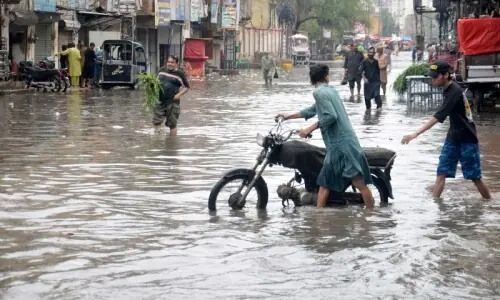
Mr Khan discussed Pakistan and Bangladesh’s fight against Covid-19 pandemic and extended commiserations on the material and human losses due to the recent flooding in Bangladesh.
He reiterated the invitation to Prime Minister Wajed to visit Pakistan, the PMO said.
Published in Dawn, July 23rd, 2020