81 killed in two days of Ethiopia protests
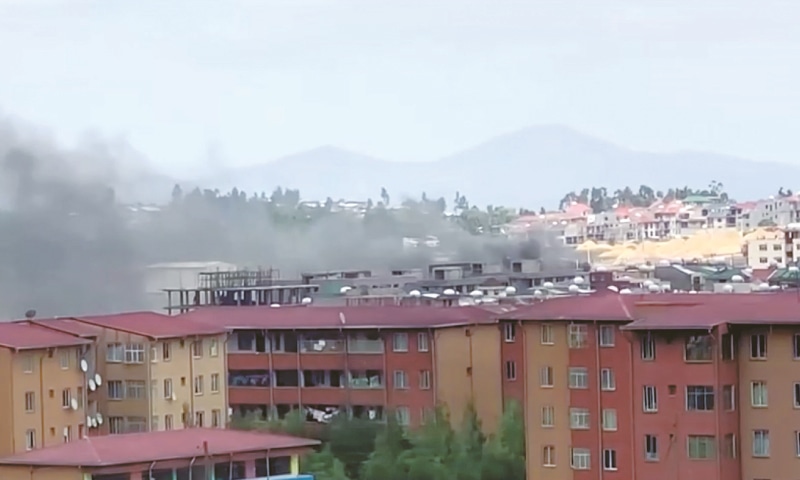
ADDIS ABABA: Two days of protests have left 81 dead in Ethiopia, after the murder of a popular singer from the country’s largest ethnic group stoked tensions that threaten to derail the country’s democratic transition.
“So far 81 people have been killed, including three Oromia special police force members,” said Ararsa Merdasa, the Oromia police chief.The military was deployed in the Ethiopian capital on Wednesday, as armed gangs roamed neighbourhoods in a second day of unrest deepening political divisions in Prime Minister Abiy Ahmed’s political heartland.
The protests were sparked by the assassination of popular musician Haacaaluu Hundeessaa on Monday night and spread from Addis Ababa to the surrounding Oromiya region.
The killing tapped into grievances fuelled by decades of government repression and what the Oromo, Ethiopia’s biggest ethnic group, describe as their historic exclusion from political power. “I am angry. Its eating me inside,” protestor Ishetu Alemu said as tires smouldered in the street behind him.
Gunshots echoed through many neighbourhoods and gangs armed with machetes and sticks roamed the streets. Six witnesses described a situation pitting youths of Oromo origin against some of the city’s other ethnic groups, and where both sides skirmished with police.
We had a meeting with the community, and we were told to arm ourselves with anything we have, including machetes and sticks. We no longer trust the police to protect us, so we have to prepare ourselves, said one Addis Ababa resident, who like others interviewed asked not to be named for fear of reprisal.
An Oromo family said an armed gang had tried to break into their compound. Police had responded, but said they couldn’t stay — they were getting too many other calls.
The military had been deployed in some areas, three witnesses said. One described a street littered with rocks that anti-Oromo protesters had thrown at police.
Many residents feared Haacaaluu’s funeral — scheduled for Thursday in his home town of Ambo — could ignite more violence.
Published in Dawn, July 2nd, 2020