Pakistani among beneficiaries of US court ruling on immigrants


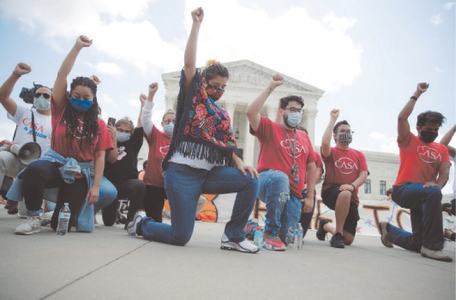
PHOENIX (United States): The US Supreme Court has kept alive, for now, the Obama-era programme that allows immigrants brought here as children to work and protects them from deportation.
The high court on Thursday ruled that the Trump administration attempted to end the programme improperly when it announced it was rescinding it in 2017. Since then, only people who were already enrolled in the Deferred Action for Childhood Arrivals (DACA) programme have been able to stay on board, and no new applicants have been accepted.
About 650,000 people have DACA protections. Here are six from around the country.
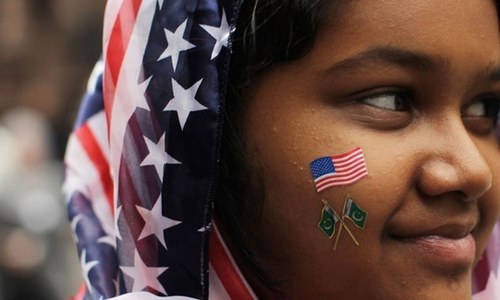
Sumbul Siddiqui: The 27-year-old lives in the Chicago area. Her country of origin is Pakistan. Growing up in the state of Georgia, Siddiqui remembers struggling to find and pay for medical care for her parents, the Pakistani immigrants who’ve had visas pending approval for nearly 20 years and didn’t have health insurance.
That hardship inspired Siddiqui, the eldest of four siblings, to pursue a career in medicine. She’s a second-year medical student at Loyola University Chicago Stritch School of Medicine and wants to focus on public health.
“It helps me connect more to underserved communities,” she said. “Understanding the struggle helps me advocate for them more.”
Born in Saudi Arabia and brought to the US at 4, Siddiqui has relied on DACA since 2013 to go to school. But she often worries about being separated from her parents and three siblings. One has DACA and two are native-born US citizens.
Siddiqui has been to Pakistan once. She met her relatives for the first time, but felt like an outsider, speaking Urdu with an accent. “I learned how American I am,” she said.
Joella Roberts: the 22-year-old woman lives Washington, D.C. Her country of origin is Trinidad and Tobago. She was 4 when she came to the US with her mom and brother in 2001. Her grandmother, who was already living in the states, petitioned to bring them as well, but their applications were delayed and they made the trip anyway.
Edison Suasnavas: The 33-year-old man lives in Saratoga Springs, Utah, and his country of origin is Ecuador. Suasnavas would not be able to analyse cancer cells for a living without DACA. He has advanced biology degrees, but until getting protections had worked a low-wage job at a hotel. Now, he’s a molecular oncology specialist in a medical lab in Salt Lake City, and he’s volunteered to help with coronavirus test diagnosing, although he hasn’t been selected yet. Suasnavas is married, has two young children, and owns a home and two cars.
Belen Sisa: The 26-year-old woman lives in Gilbert, Arizona, her country of origin is Argentina. Born in Buenos Aires, Belen Sisa and her family came to the United States as tourists when she was 6 and overstayed their visas. At the time, Argentina was in the midst of an economic recession.
Tony Valdovinos: The 29-year-old man lives in Phoenix and his country of origin is Mexico. Phoenix political consultant Valdovinos didn’t learn he was born in Colima, Mexico, and brought to the US when he was 2 until he tried to join the Marine Corps at 18.
Marisol Estrada: The 26-year-old woman lives in Atlanta and his country of origin is Mexico. One of Estradas earliest memories is walking the desert to cross the border when she was 5. A majority of DACA recipients are from Mexico.
Published in Dawn, June 20th, 2020