Can Sindh's health facilities deal with an influx of critical Covid-19 patients?


Sindh reported 960 Covid-19 cases on Thursday, bringing it that much closer to becoming the first province in the country to surpass the 20,000 mark as the countrywide total nears 50,000.
According to the Sindh Health and Population Department, 15,624 of the province's total number of cases have been reported in Karachi, accounting for over a quarter of the country's cases.
On May 7, Prime Minister Imran Khan had announced that the government will begin lifting lockdown restrictions imposed to curb the spread of the virus in phases, arguing that the country's outbreak has not progressed according to initial projections.
The announcement was made the same day that Sindh and Punjab crossed the 9,000 mark. Since then, Pakistan has reported more than 1,000 cases every single day, the highest number — 2,478 — being reported on May 13.
The data shows that the number of coronavirus cases in the country are steadily increasing, but does Sindh — which has reported the highest number of cases so far at 19,924 — have the capacity to deal with an influx of critical patients?
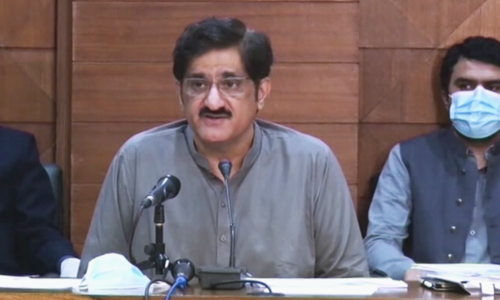
Addressing a press conference earlier today, Sindh Chief Minister Murad Ali Shah said that 143 coronavirus patients were in critical condition, 33 of whom were on ventilators.
He also warned that the spread of Covid-19 in cities had overburdened the health system of the country. If the virus spread in villages, where health resources were scarce and access to facilities was difficult, it would be tough for the government to cope with the crisis, he said.
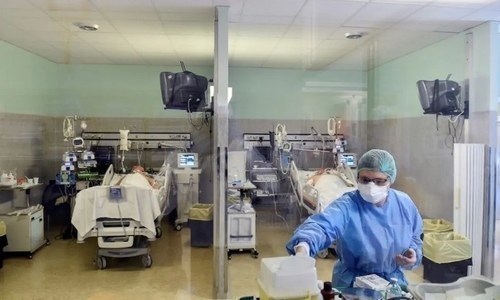
According to data released by the Sindh health department dated May 21, the province has a total of 1,137 isolation beds at 20 hospitals of which 100 are currently occupied.
Of these, 200 beds each are available at the isolation wards of Ghulam Muhammad Meher Medical College, Sukkur and the Institute of Chest Disease.
However, the Shaheed Mohtarma Benazir Bhutto Accident Emergency and Trauma Centre Karachi, Jinnah Post Graduate Medical Centre Karachi, NICH Karachi, Indus Hospital Karachi, BBMCH Kotri and the Jacobabad Institue of Medical Sciences have zero isolation beds.

All 20 hospitals have a total of 202 beds with ventilators in intensive care units (ICUs) out of which 102 are currently vacant. Shaheed Mohtarma Benazir Bhutto Accident Emergency and Trauma Centre Karachi has 26 ICU beds with ventilators, the highest number.
Institute of Chest Disease is the only facility without this equipment.
Further, the province has a total of 291 beds available in high dependency units (HDUs) of which 164 are vacant.
Lyari General Hospital has 75 beds, followed by Shaheed Mohtarma Benazir Bhutto Accident Emergency and Trauma Centre with 28 beds and the Aga Khan University Hospital with 25.