
ISLAMABAD: There are not two but possibly three families of common leopard in the Margalla Hills National Park, Islamabad Wildlife Management Board (IWMB) says.
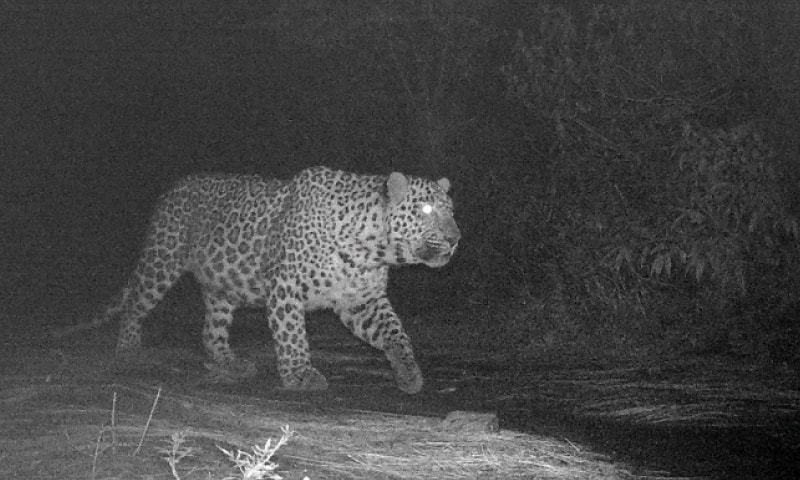
A recent camera trap image shows a bigger male leopard which had never been spotted before near the hiking trails. Not just leopards but wild animals including fox, martins, porcupines, barking deer, jackals and wild boars among others have descended from the hills, enjoying respite from humans and seem to be exploring empty spaces that were previously disturbed by trekkers and hikers.
Talking to Dawn, IWMB Chairman Dr Anis Rehman said: “This was their habitat that was taken away from them. Not only have they been breathing cleaner air but enjoying freedom of movement. It is so rare to spot an animal as iconic as the leopard. Because the preying species of the leopard are being well protected by our staff, the leopard is flourishing.”
Besides images of porcupines and deer, one of the camera trap shots showed a fox carrying a plastic bottle in its mouth. “It is as if the fox is cleaning up after,” said Dr Rehman. His staff also hopes to find goral deer, which disappeared from the Margalla Hills, a decade ago.
After the drop in outside noise over the last few weeks, various species of birds including pheasants are also benefiting from the lockdown and venturing into lower grounds. Dr Rehman said the board has taken a decision to protect species of ground nestling birds from forest fires that destroy the jungle every summer.
A conservation programme has been launched to conserve species of birds particularly, he added.
The board has also issued licences to villagers to pick Kachnaar buds to help them during times when incomes have dropped. Familiar with the terrain, Mohibullah from the IWMB who installs camera traps, hopes to capture more fascinating images of animals in spaces where they were afraid to move before.
Responding to a question, Dr Rehman said: “During the lockdown, wild animals are not at risk of contracting coronavirus. Since all human activity has been restricted in the national park, the animals are safe from the disease.”
Published in Dawn, April 11th, 2020