AFTER a series of hiccups and near misses, it appears that a deal between the Afghan Taliban and the Americans is finally on the horizon.
On Friday, both sides announced that a weeklong partial truce would take effect from Saturday, and if all went well the rival sides would sign a longer-lasting agreement in the Qatari capital of Doha on Feb 29.
If things go as planned, this could indeed be a historic opportunity to end bloodshed in Afghanistan and start the process of rebuilding the battered country.
After all, the Americans have been in Afghanistan since 2001, in the aftermath of 9/11, and dislodged the Taliban which were then ruling Kabul.
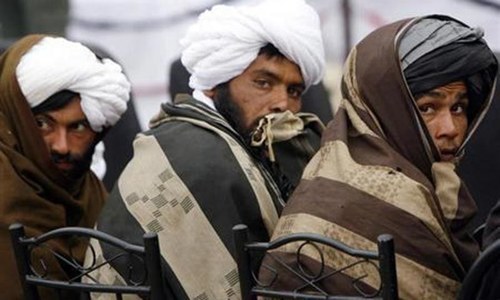
Since then, the US and its foreign allies have become the biggest power brokers in Afghanistan, in actuality underwriting the government in Kabul, whereas the Taliban hold considerable territory and in places wield more power than the Afghan government.
Therefore, any peace deal between the US and the Taliban would transform the Afghan equation considerably, and hopefully pave the way for an intra-Afghan dialogue.
It is quite clear that Washington is ready for a deal; after all the recent op-ed by Sirajuddin Haqqani — who leads the Haqqani Network, a part of the Taliban and an organisation branded as a terrorist outfit by the US — in The New York Times indicates that the American establishment has accepted the Taliban as a legitimate player.
Interestingly, not too long ago the US had put relentless pressure on this country for ‘sheltering’ the Haqqanis. This only shows that in the fluid world of international politics, perceptions and designations can change very, very quickly.
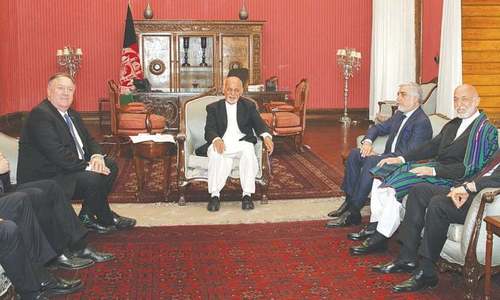
“Everyone is tired of war,” wrote Mr Haqqani in his florid op-ed, while US Secretary of State Mike Pompeo also said that following the partial truce the “US-Taliban agreement is expected to move forward”.
Indeed, the Taliban, though no strangers to violence, are in nature quite different to militant groups such as Al Qaeda or IS, mainly because the Afghan group has a nationalist outlook and wants the exit of Americans from their country, while the latter outfits have grander, pan-Islamic designs.
It is also a welcome sign that the Taliban have pledged to talk to the Afghan government if the deal with the Americans succeeds. In fact, any lasting peace in Afghanistan is unlikely to succeed unless the process is Afghan-led and Afghan-owned, and the multiple ethnic and tribal stakeholders in that country are all on board.
However, if the Kabul power elite is to hammer out a successful deal with the Taliban, it needs to put its own house in order.
There has been much acrimony following the Afghan presidential election, with Abdullah Abdullah not accepting the results and questioning President Ashraf Ghani’s victory.
If there is another power struggle in Kabul, it is unlikely that a lasting peace agreement in Afghanistan can succeed.
Published in Dawn, February 24th, 2020