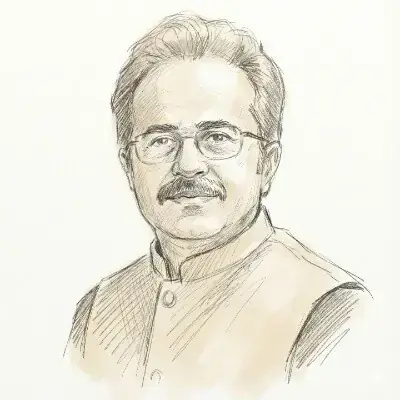
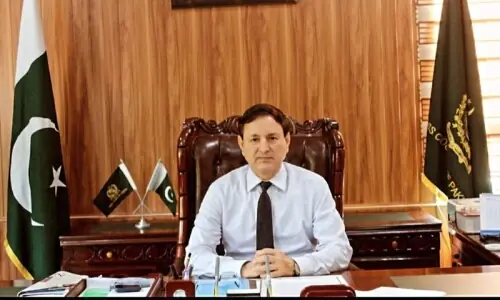
ISLAMABAD: Chief Justice of Islamabad High Court (IHC) Justice Athar Minallah on Thursday directed the secretary Ministry of Interior to stop corporal punishment in schools and set up a mechanism for receipt and redressal of complaints regarding inhumane treatment of students in the federal capital.
The chief justice admitted a petition for regular hearing filed by famous singer and social worker Shahzad Roy’s Zindgi Trust, seeking directions to ban corporal punishment in educational institutions.
The court issued notices to the secretaries interior, law and justice, the federal education and professional training, human rights, director general education and the inspector general of Islamabad police and sought a reply till March 5.
“In the meanwhile, respondent No 5 [secretary interior] is directed to ensure that children enrolled in schools under its control are not subjected to any humiliating and degrading treatment which would violate the right of the child’s dignity guaranteed under Articles 14 of the Constitution of the Islamic Republic of Pakistan 1973,” the court order stated.
The court also issued directions to other respondent authorities as well. “It is noted that corporal punishments are not in consonance with the constitutionally guaranteed right of inviolability of dignity notwithstanding section 89 of the Pakistan Penal Code 1860. Respondent No 5 is further directed to put in place a mechanism for receiving complaints and redressal thereof against alleged use of corporal punishments within the Islamabad Capital Territory.”
Shahzad Roy’s Zindgi Trust moves IHC seeking directions to ban corporal punishment in educational institutions
“The federal government is also directed to advise the Private Education Institutions Regulatory Authority to issue guidelines to the private schools in the light of the above observations. The Ministry of Human Rights is directed to submit a report regarding status of the compliance with the obligations of the State of Pakistan under the United Nations Convention on the Rights of the Child in relation to the prohibition of corporal punishment.”Dr Shahbuddin Usto, counsel for Zandgi Trust, contended that corporal punishment was being used to discipline children in schools. He argued that corporal punishment in any form was in violation of the fundamental rights guaranteed under Articles 14 and 9 of the Constitution.
He argued that the use of corporal punishment affected the child physically as well as emotionally and thus caused irreversible damage to them. It exposes them to fear, anger and depression.
He said aggressive and degrading treatment in the form of corporal punishment was destructive and has huge impact on the child’s psychology besides causing physical harm.
He argued that the federal government was yet to fulfil its obligations under Article 19 read with other provisions of the United Nations Convention on the Rights of the Child which Pakistan had ratified. It was contended that all forms of corporal punishments were a major cause for children who refuse to attend schools.
Justice Minallah while adjourning the hearing to March 5 directed the registrar office to issue notices to the respondents for filing a report and para-wise comments within a fortnight.
Notices should also be issued to the attorney general for Pakistan and the secretary, Ministry of Human Rights, the court order added.
Published in Dawn, February 14th, 2020