India school faces sedition charges over citizenship play


Indian police have launched a sedition investigation against a primary school over a play that allegedly criticised a contentious citizenship law, officials said on Wednesday.
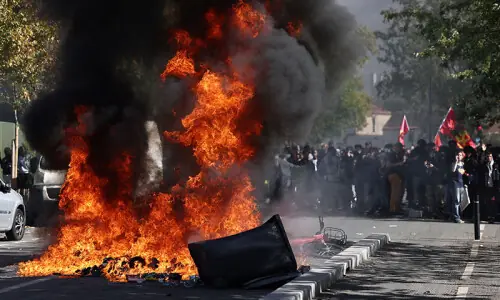
There have been widespread street demonstrations against the law introduced by the Hindu-nationalist government that grants citizenship to religious groups from three neighbouring countries, but excludes Muslims.
Police said they were laying initial charges under the British colonial-era law against the principal and the management of the school in Bidar district in the southern state of Karnataka.
The probe came after a member of the youth wing of Prime Minister Narendra Modi's right-wing Bharatiya Janata Party (BJP) filed a complaint against the school.
"We have started an investigation into the complaint by an activist who alleged that the play criticised and disrespected Modi," Bidar police chief T. Sreedhara told AFP.
He added that the young student actors, aged between nine and 10 years old, were also being questioned, but would not be charged.
A school official told AFP they were being "unnecessarily" targeted by the government for expressing their views.
The play, which was performed on Sunday, was part of Shaheen Public School's founding day celebrations.
A video of the five-minute play shared on social media showed students talking about how they feared the government would ask millions of Muslims to prove their nationality or be expelled from India.
The citizenship law, combined with a mooted national register of citizens, has stoked fears that India's 200 million Muslims will be marginalised.
The play ended with a poem written by a Bollywood lyricist that has become a rallying point for hundreds of thousands of protesters across India.
The British-era sedition law enacted in 1860 carries a maximum penalty of life in prison. Prosecutions are rare but it has frequently been used against critics of the government of the day.
Dozens of demonstrators have been charged with sedition in the ongoing protests.
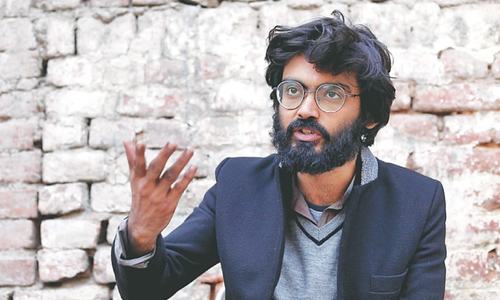
On Tuesday, New Delhi police arrested a student activist on sedition charges after a video posted on social media allegedly showed him telling a crowd to "cut off" India's northeast to force the government to roll back the law.
Last week, women protesters in northern Uttar Pradesh state, which is ruled by the BJP, were charged with sedition for holding a sit-in in the heart of its capital Lucknow.