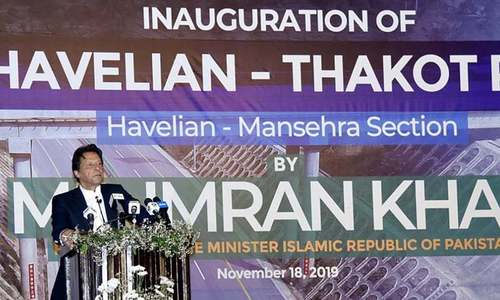
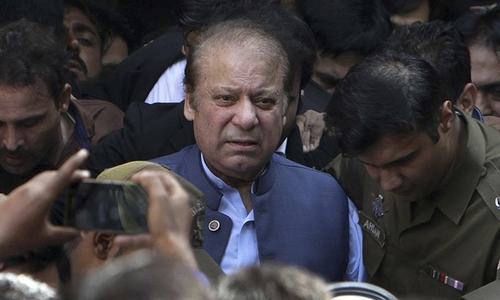
IMRAN Khan’s recent, ill-considered swipe against the judiciary, evidently triggered by what he perceived as a disparity in the judicial system’s treatment of the elite and the rest of the citizenry that allowed Nawaz Sharif to leave the country, has met with a firm response by the country’s top judge.
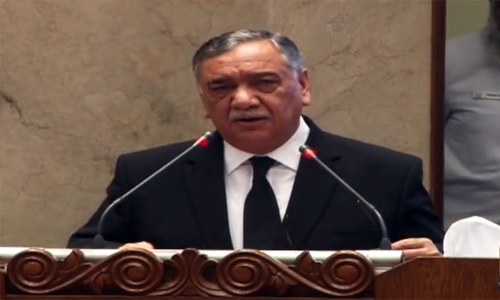
Chief Justice Asif Saeed Khosa, speaking at an event on Wednesday, said it was the government itself that had permitted the former prime minister to proceed abroad.
Clearly, the prime minister’s calling upon the judiciary to ‘restore public confidence’ in its working irked Justice Khosa, who has made judicial reforms the cornerstone of his tenure. To that end, at the same event, he also appreciated Mr Khan’s stated intention of enhancing resources for the judiciary.
As the final arbiter of the law and guardian of fundamental rights, the judicial system has a critical role to play in a nation’s trajectory.
On that score, Pakistan’s judiciary admittedly has an uneven record.
For instance, less than a decade after partition, the judgement in the Maulvi Tamizuddin Khan case ratified the governor general’s dismissal of the first constituent assembly. That fateful verdict gave birth to the infamous ‘doctrine of necessity’ which has echoed through Pakistan’s turbulent history and hobbled democracy time and again. Another stain on the judiciary’s record is the death sentence handed down to Zulfikar Ali Bhutto, often denounced as a ‘judicial murder’ for being based on overt political expediency rather than evidence.
These are but two of several instances where our courts unfortunately chose to be on the wrong side of history. Then again, more recently, the same institution has also delivered landmark verdicts that have upheld the highest principles of humanity, such as the acquittal of Aasia Bibi — that too in the face of a certain and violent backlash from the ultra right. The Faizabad dharna judgement, meanwhile, reaffirmed the supremacy of civilian rule and clearly defined institutional boundaries.
Such verdicts reassert the rule of law and strengthen democracy. However, progress has been patchy, stymied now and again by hyper judicial activism that has breached institutional boundaries, thereby weakening the democratic process.
Hopefully the superior judiciary is mindful of this history, and inclined to be more circumspect.
The present chief justice has focused particularly on the dire need for judicial reform, the absence of which causes untold misery to the less privileged.
For example, he has overseen the setting up of model courts that have considerably reduced the massive backlog of criminal cases; speedy disposal of cases also means reduced legal costs for litigants. Of course, far more needs to be done to make the justice system more equitable, such as free legal aid and financial support for prisoners languishing behind bars even after completing their sentences because they are unable to pay their fines. Nevertheless, the direction is encouraging, and it must be sustained.
Published in Dawn, November 22nd, 2019