THE fact is that were Afghanistan to implode, the chaos thus spawned would not remain confined within its borders, and would spread across the region.
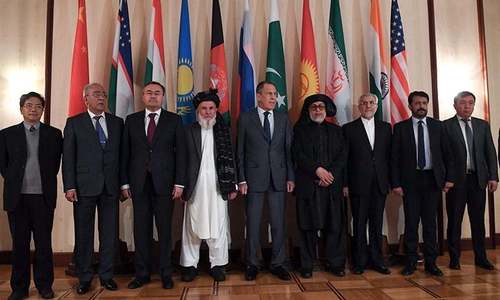
Perhaps this is the key concern behind the quadrilateral talks that took place in Moscow focusing on Afghan peace, and featuring diplomats from Pakistan, the US, Russia and China.
Read: Four countries call for reducing violence in Afghanistan
All the participating states have stakes in Afghan security, which is why the meeting called for a resumption of stalled peace talks between the Afghan Taliban and the US, the real power behind the government in Kabul.
The participants also “urged all sides to immediately reduce violence”, as recently released UN figures show that a large number of civilians have been killed in acts of violence within Afghanistan.
The quadrilateral process is a welcome development and may pave the way for regional states to support Afghan peace.
Where the US and Russia are concerned, ironically, both states have played key roles in bringing Afghanistan to its current sorry pass.
Kabul became a central battlefield in the Cold War, as the Americans and Soviets jousted for influence; Afghanistan has yet to recover from the instability of the ‘jihad’ that was fought in its cities and towns.
And while the erstwhile USSR was humbled for its imperial hubris, the Americans soon found themselves involved in a new Afghan adventure, this time bringing ‘justice’ and ‘democracy’ to Afghanistan by punishing the Taliban for their support to Al Qaeda in the post-9/11 scenario.
However, today both Washington and Moscow find themselves trying to bring peace to Kabul.
Naturally, if Afghanistan is destabilised further, Russia will be concerned due to its geographic proximity, while the US will also want to prevent terrorist groups from finding refuge in the country. As for China, it also fears Afghanistan becoming a base for extremists that may target its interests. And Pakistan has the most to lose from an unstable Afghanistan; for the past four decades, this country has been affected by the instability within the borders of its western neighbour.
Apart from the fears of neighbours and regional powers, Afghan civilians have paid a high cost for hostilities between their government and the Taliban. As per UN figures, over 1,100 non-combatants were killed in violence between July and September, with the Taliban carrying out numerous bloody attacks during the Afghan presidential polls.
It is hoped the quadrilateral process is carried forward so that talks between the US and Taliban resume.
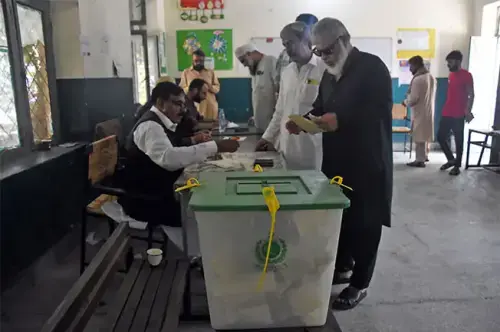
Meanwhile, reports that the results of September’s presidential election have been delayed are worrying.
A power vacuum in Kabul will only result in more chaos, which is why a representative government acceptable to all Afghans must take power soon. And while external players have their roles, lasting stability can only come when the Taliban and their Afghan rivals decide to end hostilities and work for peace.
Published in Dawn, October 28th, 2019