Pakistan formally suspends trade with India

ISLAMABAD: Pakistan on Friday formally downgraded its trade relations with India to the level of Israel with which Islamabad has no trade ties at all.
In reaction to India’s decision to revoke Article 370 of its constitution that granted occupied Kashmir a special status, Pakistan has downgraded diplomatic relations with India and now suspended bilateral trade with it.
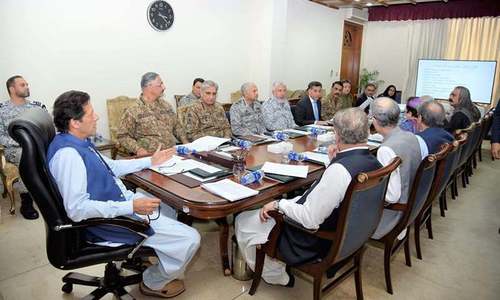
On Friday, the federal cabinet headed by Prime Minister Imran Khan endorsed the decisions taken by the National Security Committee and the joint session of parliament, which include suspension of trade ties with India.
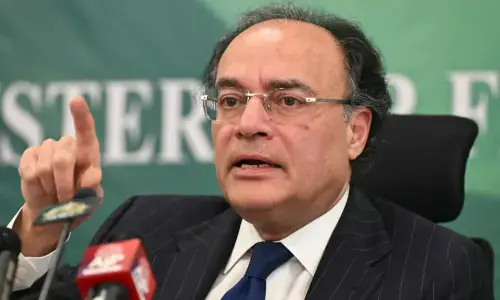
Special Assistant to the Prime Minister on Information Firdous Ashiq Awan, replying to a question at a media briefing, said that Pakistan had also suspended import of Indian goods under the Pak-Afghan transit treaty.
Cabinet approves decision taken by National Security Committee
Two different notifications were issued soon after the cabinet meeting to implement the decision to suspend bilateral trade with India with immediate effect and until further orders. As per notification SRO928 of 2019, all kind of exports to India have been suspended by amending the Export Policy Order 2016.
Through the other notification — SRO927 — by amending the Import Policy Order 2016, the government has banned import of goods of Indian origin or those imported from it. Earlier, this ban was only limited to imports from Israel. In February Pakistan did not reciprocate to the New Delhi decision to withdraw the Most Favoured Nation (MFN) status to Islamabad in the backdrop of Pulwama attack.
India had granted the MFN status to Pakistan in 1995. The term means the country which is the recipient of this treatment must receive equal trade advantages by the country granting such treatment
A day later, India slapped 200 per cent import duty on Pakistani goods.
The restrictions imposed by India in the backdrop of Pulwama attack have affected the flow of bilateral trade. The value of bilateral trade in February was $164m, which fell to the level of $105m in June.
Pakistan’s imports have already entered negative growth with almost all countries, except India, as Islamabad mostly imports raw materials from India.
Maximum share of imports constitutes p-Xylene (an important chemical feedstock), polypropylene (a thermoplastic polymer used in a wide variety of applications), reactive dyes and preparations based thereon, pharmaceuticals and tea, respectively.
Approximately 100 other products are imported from India but these remain less in values in a few millions of dollars.
The bulk of Pakistan’s exports to India include fresh fruits — dates, figs, pineapples, avocados, guavas, mangoes and mangosteens, fresh or dried — cement, the second biggest exportable product, and sesame seeds, the third biggest export to India. The fourth biggest Pakistan export to India is gypsum.
And the export of almost 100 other products to India is valued at less than $5m per year.
Published in Dawn, August 10th, 2019