Policy on suspected militant groups changed: minister

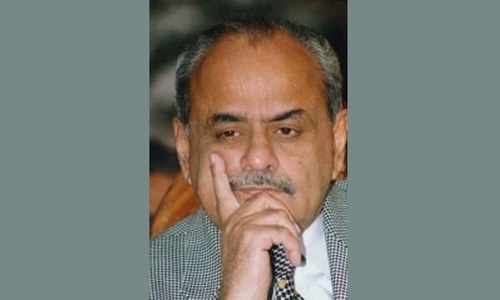
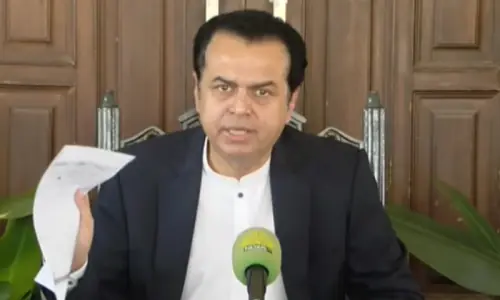
KARACHI: Interior Minister retired Brig Ijaz Ahmad Shah has said the policy regarding suspected militant organisations had been changed and the credit for this went to the government led by the Pakistan Tehreek-i-Insaf (PTI).
He was responding to a question at a press conference on Thursday about the arrest of Jamaatud Dawa chief Hafiz Muhammad Saeed.
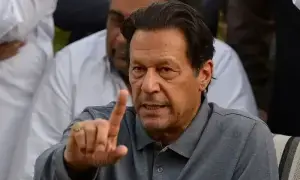
Mr Shah recalled that when he was not the prime minister, PTI chairman Imran Khan had repeatedly said there should be no jihadi groups in the country.
Elaborating, he said that Mr Khan had made it clear that he would not take dictation from anyone, including “militant organisations”.
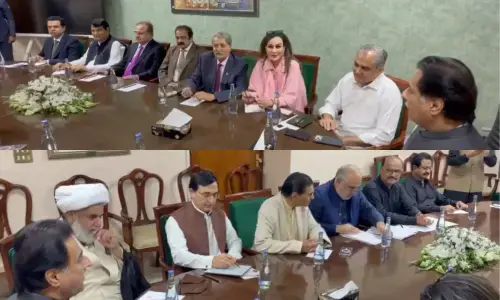
Before the press conference, the federal minister presided over a meeting on law and order along with Sindh Governor Imran Ismail at the Governor House. All key stakeholders, including the inspector general of Sindh police, director general of Pakistan Rangers (Sindh) and representatives of law enforcement agencies attended the meeting.
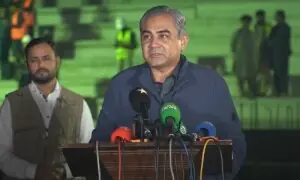
At the press conference, the interior minister said the law and order situation in Karachi had improved considerably, for which he paid tribute to the law enforcement agencies.
He said every citizen had the right to mount protests but during such demonstrations no problems should be created for those not taking part in them. Rule of law is necessary for the survival the country.
In reply to a question, he said the National Accountability Bureau (NAB) had finally opened the process for accountability in the country. NAB is an independent institution whose chairman was appointed by the Pakistan Muslim League-Nawaz and the Pakistan Peoples Party, not the PTI.
He said the government was not behind the recent arrests. “If someone indulges in some misdeed, he will be arrested as no one can be spared,” said the minister.
In response to another question, Brig Shah said that former prime minister Shahid Khaqan Abbasi and former finance minister Miftah Ismail must have done something wrong; that was why the NAB was looking for them.
“If it is found that the former premier is not involved in wrongdoing, he will be freed,” he said.
“Prime Minister Khan plays on the front foot,” the minister said.
“There has been a clear policy change,” he said, adding that the premier was on record as having said he would not get involved in other people’s war. “He also said that there should be no warlord (in the country).”
In response to a question about Dr Aafia Siddiqui’s release, the interior minister said he did not know about the agenda of the premier’s visit to Washington. “(But) I am sure that Imran Khan would take up the matter with the US president, which no Pakistani ruler had talked about before.”
The minister was of the view that Mr Khan would act on any matter which was in the interest of the country. He said that civilian leaders and military chiefs were on the same page.
Mr Shah said the prime minister was taking each and every step that was required to ease the financial crisis the country was facing. He also recalled a meeting between the army chief and Mr Khan in which the need to check smuggling was stressed because it was “eating the country like termite”.
When asked about the removal of some ministers, Brig Shah said they were shown the door “for want of better performance”.
“Had they been removed for corruption, they would have been in prison,” said the interior minister.
On the occasion, Governor Ismail said the interior minister had come to Karachi on the special instructions of the prime minister. He said he had discussed the political situation in Sindh with the minister.
Published in Dawn, July 19th, 2019