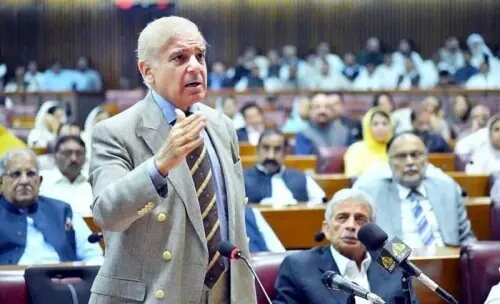
FOR a brief moment, it looked like former finance minister Asad Umar had carved for himself an important new role in the ruling party. In his speech in parliament, he surprised many by taking a contrary line to the one presented by the government in its budget. And then, in a few remarks, he spoke of the sugar industry and how the beneficiaries of its rising prices needed to be investigated. The context was the tax on sugar that the budget has brought in, and how it would fuel further price increases.
Each time the sugar industry is mentioned in such a context, it is time to pause. The sugar industry is to Pakistan what Wall Street is to American capitalism. That might not come across as an appropriate comparison, but it becomes clearer when one considers the clout that Wall Street wields in American politics, and the number of people who have served in high positions in Washington D.C., particularly in the Treasury department, and its influence on Capitol Hill. In Pakistan, it is worth bearing in mind that the leadership of the three large political parties — the PML-N, PPP and PTI — have all heavily invested in sugar mills. From Asif Zardari and Nawaz Sharif to Jehangir Khan Tareen, to name only a few, there are many who derive their strength and clout from sugar. This is the one sector that no government can reform, to the point where in some places its interests can lead to a ban on the use of unrefined sugar, or gur. Mr Umar is right when he says the sugar sector needs to be investigated. But who will carry out the investigation? Its interests know no party, and have a special place in the power politics of Pakistan. Sugar is where state and capital are fused so tightly that no investigation by any arm of the state is likely to be able to advance.
Mr Asad also spoke on some of the conditions the IMF had originally asked for when he was leader of the negotiating team. According to him, the IMF had conditions that were far harsher than what we see in the budget, such as a near-doubling of gas prices and a sharper increase in taxes than what the present budget brings. All this may be true, but the required adjustment cannot be postponed indefinitely. Beyond firefighting, which is what is being planned at the moment, the government will have to make progress on badly needed and long-delayed structural reforms. If that does not happen, the same harsh conditions will return without the option of postponement.
Published in Dawn, June 22nd, 2019