Iconic artist Jamil Naqsh passes away in London

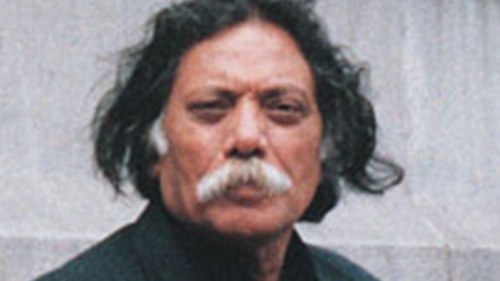
Iconic Pakistani painter Jamil Naqsh passed away in London on Thursday after contracting "serious pneumonia" earlier this month.
Naqsh, 79, who had been settled in London for the last 10 years, was admitted to St Mary's Hospital on May 7, where doctors did not appear optimistic about his chances of recovery.
Jamil Naqsh is of a generation of artists such as Sadequain, Bashir Mirza, Ahmed Pervez, Shahid Sajjad, Masud Kohari, who gave direction to Pakistani art after the country's inception.
Born in Kairana, Uttar Pradesh, in 1939, Naqsh grew up in a home frequented by artists, writers, poets, musicians, politicians and others.
In 1954, Naqsh briefly joined the National College of Arts in Lahore. He was a serious student who was particularly drawn to miniature painting. However, he left NCA after a year to become a full-time student of dedicated miniaturist Ustad Mohammad Sharif. A year later, he moved to Karachi.
His first solo exhibition show was staged at the Lahore Arts Council and then the Karachi Arts Council in 1962.

He was conferred the Shakir Ali Award in 1980, and the President's Pride of Performance and the Artist's Association of Punjab Award for Pursuit of Excellence in 1989. The Arts Council of Pakistan also awarded him in 1982 to commemorate 20 years of his contributions to art. He was awarded the Sitara-i-Imtiaz in 2009.
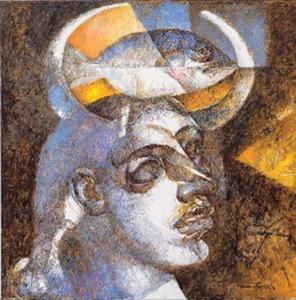
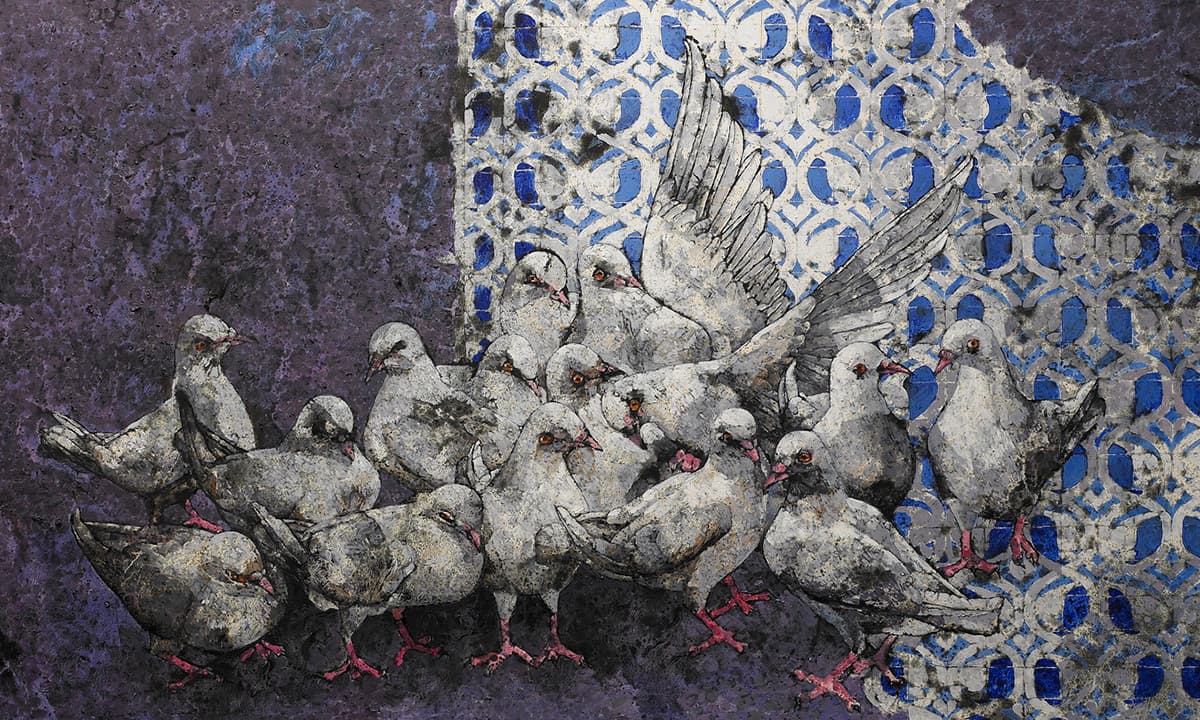
Naqsh's style is distinct and easily recognisable, and his art has been described as both innovative and representative of his time period.
He was a consummate draftsman with an innate sense of colour and design. Basically a figure painter, he evolved a personal style over his six-decade-long career to portray famous personalities from Islamic history, gods and goddesses from Hindu mythology, Buddhist subjects and idealised figures such as Punjabi farmers, Kashmiri peasants, etc.