Arrests, fresh curfews in Lanka after communal clashes


COLOMBO: Sri Lanka’s police arrested over 100 suspects and reimposed night curfews in violence-prone areas on Wednesday after anti-Muslim riots left one man dead and caused extensive damage to homes, businesses and mosques.
Police spokesman Ruwan Gunasekera said 78 people arrested in the worst-affected North-Western Province (NWP) were remanded in custody, while the rest were detained after a manhunt in other areas.
Some 5,500 additional police were deployed in NWP to contain the violence that claimed the life of a Muslim man on Monday. Scores of private homes, Muslim-owned shops and businesses were destroyed, while several mosques were also vandalised.
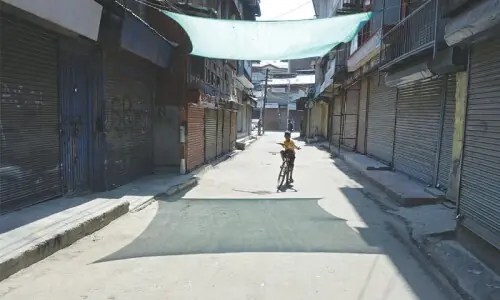
Gunasekera said a night curfew was being reimposed in NWP, just north of the capital, as well as the adjoining Gampaha district, which shares a border with Colombo, as a measure to “maintain peace”.
However, a top police source said there will be no curfews elsewhere in the country. The entire country was under night curfews for two straight days after the violence escalated.
The night curfew on Tuesday ensured there was no repeat of Monday’s violence against Muslims, who make up some 10 per cent of Sri Lanka’s population of 21 million.
“The situation is now totally under control,” said military spokesman Sumith Atapattu.
Official sources said police deployed special teams to review CCTV camera footage to identify the perpetrators and carry out more arrests.
More police and army units were seen deployed in the troubled areas as the authorities lifted the nationwide curfew on Wednesday morning.
But Muslims in NWP remained nervous and stayed indoors ON Wednesday, after sword-wielding rioters killed one man late Monday while vandalising scores of shops and mosques.
In Bingiriya, where some 2,000 people went on the rampage, Muslim cleric M.I.M. Siddeeque said the community was worried. “Our people are still afraid to go out,” he said.
Government spokesman Navin Dissanayake said the authorities had identified the leaders of the mobs and they were already in police custody.
Despite the extraordinary security measures, the minorities felt insecure, said Dissanayake, who is also a government minister.
“People feel insecure and I acknowledge that,” Dissanayake told reporters in Colombo. “We have given the armed forces of this country ... a complete free hand to tackle the security situation.”
Published in Dawn, May 16th, 2019