Unilateral efforts to de-escalate tensions won’t help: experts

ISLAMABAD: Experts believe that India is looking for a face-saving way out of the current crisis and warn that Pakistan’s unilateral steps cannot de-escalate tensions unless India reciprocates.
They discussed how the tensions could be contained and what steps were needed to be taken for de-escalation at a roundtable on “Escalation Management and Control between India and Pakistan”, organised by the Islamabad Policy Institute (IPI), an Islamabad-based think tank.
Know more: Aiming for peace
The session took place against the backdrop of the goodwill gestures extended by the Pakistan government, including Prime Minister Imran Khan’s offer of dialogue to India on all issues and release of the Indian Air Force pilot who had been taken captive after his aircraft was shot down.
Situation may again worsen after IAF pilot’s release, apprehends former defence secretary
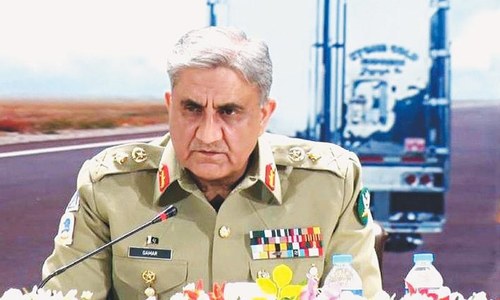
In his keynote address, Strategic Plans Division (SPD) adviser and former ambassador Zamir Akram said “de-escalation is only possible once both adversaries have a common interest in de-escalation” and that unilateral steps would not work.
He spoke about various factors that would influence Indian decision to de-escalate, including existence of nuclear deterrence, public opinion, differential cost of crisis, role of international crisis managers and the end state.
“The dilemma facing [Indian PM Narendra] Modi is that the end state in case of de-escalation at this stage would not be very attractive for him,” Mr Akram maintained, adding that the Indians were projecting Pakistani intent to reduce tensions as “a sign of weakness”.
Former defence secretary retired Lt Gen Asif Yasin Malik spoke about the motives for Indian intrusion into Pakistani airspace and then claiming an attack on an alleged terror sanctuary. However, he said it seemed India while escalating did not plan the return route because of which PM Modi was finding it difficult to de-escalate.
The cost of de-escalation for Mr Modi, he contended, in political terms was his increased vulnerability in upcoming Indian elections.
He argued that the release of the Indian pilot was inconsequential and at best would help improve international perceptions about Pakistan, but would not influence India’s decision-making. The Indians, he opined, could make another attempt to settle score.
Former defence minister retired Lt Gen Naeem Khalid Lodhi, too, spoke about the Indian military ambitions to attempt more ‘mischief’ in future. “Escalation would again go up after the pilot’s release,” he anticipated. He, therefore, advised the relevant institutions to ensure continued vigilance.
Khalid Banuri said the current crisis was a test of diplomacy. He said Pakistani diplomats must highlight at international forums the Indian violation of the UN Charter, the attempt to instigate an unprovoked international armed conflict and grave violations of the UN resolutions.
Defence analyst Syed Mohammad Ali said that Pakistan had simultaneously demonstrated resolve and capability along with restraint in its calculated use of force. The Pakistan Air Force could have caused much greater surprise but restrained itself because it only aimed at dissuading India from any future misadventure, he said.
IPI executive director Prof Sajjad Bokhari highlighted the need for addressing the root cause — the Kashmir dispute — which was keeping the situation unstable. He said the ongoing efforts for de-escalation even if successful were no guarantee that Pulwama-like incidents, which had pushed the nuclear-armed neighbours to the brink of war, would not happen again unless the Kashmir issue was resolved.
Speakers were of the opinion that the Indian government’s move to sack Air Marshal Chandrashekharan Hari Kumar, commander-in-chief of the Western Air Command, in a way represented Indian political leadership’s acknowledgement of effectiveness of PAF air strikes and the inability of Indian Air Force to defend, something it could not say in public.
They said the Pakistani response made it evidently clear to India that limited strikes could not be the new normal.
Published in Dawn, March 2nd, 2019