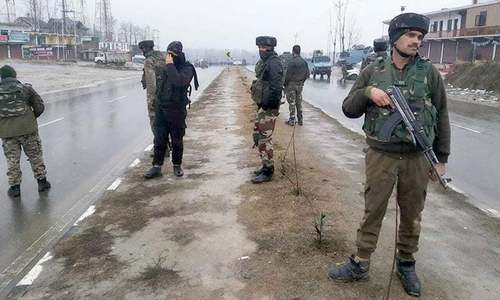
Kashmir bomber radicalised after beating by troops, parents say


SRINAGAR: A suicide bomber who killed 44 paramilitary personnel in India-held Kashmir joined a militant group after having been beaten by troops three years ago, his parents said on Friday.
Jaish-e-Mohammad (JeM) has claimed responsibility for Thursday’s car bomb attack on a security convoy, the worst assault in the disputed Himalayan region. It comes months before a key Indian general election.
Adil Ahmad Dar, 20, from the village of Lethipora in occupied Kashmir, rammed a car full of explosives into the convoy.
“We are in pain in the same way the families of the soldiers are,” said farmer Ghulam Hassan Dar, adding that his son had been radicalised after police stopped him and his friends on the way home from school in 2016.
“They were stopped by the troops and beaten up and harassed,” he said, adding that the students were accused of stone-pelting.
“Since then, he wanted to join the fighters.”
A video released by JeM after the attack showed his son, dressed in military fatigues and carrying an automatic rifle, detailing his plan to carry out the bombing.
His mother, Fahmeeda, corroborated her husband’s account.
“He was beaten by Indian troops a few years back when he was returning from school,” she said. “This led to anger in him against Indian troops.”
Both parents said they were unaware of their son’s plan to attack the convoy.
Adil Dar did not return home from his work as a labourer on March 19 last year, Fahmeeda added. “We searched for him for three months,” she said.
“Finally we gave up efforts to bring him back home.”
The two accounts could not be independently verified.
A spokesman for India’s home ministry did not immediately respond to a request for comment.
Ghulam Hassan Dar said he blamed politicians for his son’s death.
“They should have resolved the issue through dialogue,” he said, referring to the conflict over India-held Kashmir.
“It is they who are responsible for driving these youth into militancy. The sons of the common man die here, whether they are Indian troops or our sons.”
Published in Dawn, February 16th, 2019