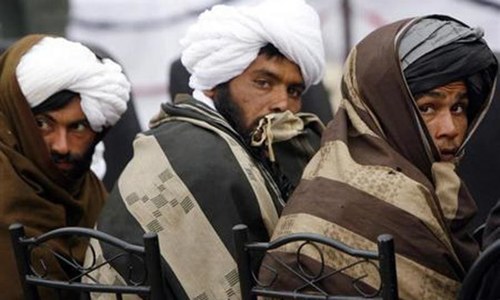
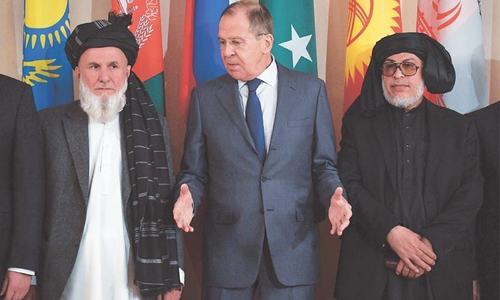
Kabul sees Taliban-Afghan opposition talks in Moscow as betrayal


KABUL: Senior Afghan officials warned on Monday that talks this week between Taliban militants and opposition politicians, including former president Hamid Karzai, betrayed the principles of democracy and Afghanistan’s best interests.
The talks, starting on Tuesday (today) in Moscow, come 10 days after peace negotiations between the United States and the Taliban in Qatar ended with signs of progress towards the withdrawal of thousands of foreign troops from Afghanistan and an end to more than 17 years of war.
Moscow had decided to snub Afghan government officials, sources said, to ensure the participation of the Taliban who refuse to hold talks with representatives of Western-backed President Ashraf Ghani, branding them puppets of the United States.
Fazel Fazly, chief adviser to Ghani, expressed “regret” that politicians who previously led Afghanistan’s democratic transition were to meet the Taliban. “[They] are ready to bypass these principles and move towards [the principles’] destruction due to differences and being away from power,” Fazly said in a Tweet.
Abdullah Abdullah, the government’s chief executive, said the Taliban would have achieved their objective once foreign troops withdrew, ending the need for talks.
While Russian officials are expected to remain in the background, the Moscow talks highlight the growing role Russia is playing in Afghanistan.
Karzai confirmed his attendance at the talks, saying in a tweet he would carry a message of “peace, unity sovereignty and progress for all of us”.
Another delegate to the Moscow sessions, Mohammad Hanif Atmar, an influential former national security adviser to Ghani, said they would emphasise the need to include the government in future intra-Afghan discussions.
But he urged the government not to look at the peace process from a “narrow governmental window”.
Taliban spokesman Zabhullah Mujahid said the conference was about “opening channels to reach an understanding with non-government Afghan political groups”. He said the movement wanted to explain its policies towards an “enduring peace in the homeland and establishment of an intra-Afghan Islamic system of governance”.
Published in Dawn, February 5th, 2019