Alarm bells ring on fiscal deficit as govt borrowing from SBP shows massive spike


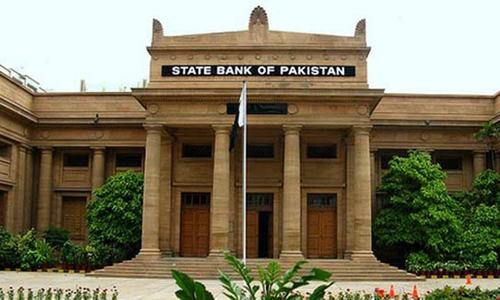
ISLAMABAD: The Monetary and Fiscal Policies Coordination Board on Thursday expressed serious concern over the growing budget deficit and inflation, increasing government borrowing from the State Bank of Pakistan (SBP) and sluggish revenue performance.
The board was also worried over the poor show by manufacturing sector and called for earliest possible course correction and advised the government to immediately finalise its medium-term strategy paper for macroeconomic stabilisation.
Finance Minister Asad Umar presided over the meeting and assured the board of government’s commitment to improving the fundamentals of economy and achieving sustainable and balanced economic growth.
“Fiscal consolidation remained a challenge during the first quarter of the current fiscal year as fiscal deficit increased to 1.4 per cent, from 1.2pc in comparable period last year,” Secretary Finance Arif Ahmed Khan was quoted in an official statement. The FBR’s revenue rose by 6.4pc and “if gains traction, it may bridge up the fiscal deficit going forward.”
The Ministry of Finance reported last week that defence and current expenditure surged significantly while development spending dropped drastically in the first quarter of the current year as consolidated fiscal deficit widened to 1.4pc of the gross domestic product (GDP).
It said the total defence spending in first three months (July-September) rose to 0.6pc of GDP, compared to 0.5pc in same period last year. In absolute terms, the defence expenditure increased by 21pc to Rs219.4bn.
The current expenditure also grew by 19pc to Rs1.48 trillion in the first quarter versus Rs1.24tr of corresponding period last year. As percentage of GDP, current expenditure was up 3.9pc this year, from 3.5pc of last year. Public Sector Development Programme (PSDP), on the other hand, plunged 35.5pc to Rs106.6bn in 1QFY19 as against Rs165bn in comparable period last year. In other words, PSDP spending was down to 0.3pc of GDP, from 0.5pc of last year.
The saving grace came from four provinces who together offered a rare cash surplus of a record Rs246bn.
The board is required to set the direction of government with a mix of public and private sector advice. Led by the finance minister, the board is represented at the highest level by ministries of finance, commerce and planning, SBP and two independent private sector economists.
SBP governor discussed monetary aggregates along with views on the economy. Broad money (M2) witnessed a rise of Rs35bn from July to Nov 16 as compared to a decrease of Rs67bn in same period last year, which was entirely contributed by net domestic assets of the banking system as net foreign Assets continued to contract.
Despite rising interest rate overall private sector credit remained higher than last year. The government borrowed Rs2.859tr from SBP, versus Rs195m in same period last year. On the other hand, it retired Rs2.619tr to scheduled banks as against a borrowing of 201.5m. As a result, net government borrowing from the banking system reached Rs186.5bn, tom Rs383.5bn over the previous year.
The private sector credit surged to Rs304bn during the period, as compared to Rs69bn last year with expansion seen largely in working capital and fixed investments.
Khan told the meeting that external balance had improved in the first four months of this fiscal year, as current account contracted by 4.6pc due to significant increase in workers’ remittances, containment in imports and increase in export growth. He said the headline inflation was increasing on the back of non-food inflation above 8pc, whereas food inflation was rising moderately by 2.7pc on account of smooth supply of commodities in the market and better price monitoring system.
He also updated the board about the economic reforms approved by the Economic Advisory Council. The meeting further discussed export credit facility offered by Saudi Arabia, envisaging the purchase of crude oil and or other petroleum product(s) of up to $3.24bn per annum on a 12-month deferred payment basis, a statement said.
Published in Dawn, November 30th, 2018