Next IMF programme to be Pakistan's last, Asad Umar tells stockbrokers



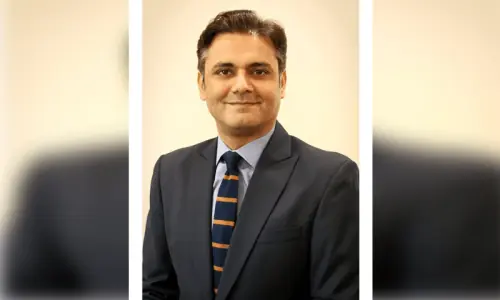
Finance Minister Asad Umar on Saturday claimed that Pakistan's economy is already on the road to recovery and that the next IMF programme that the government is pursuing will be its last.
Umar made those remarks during a question and answer session following his meeting with a delegation of stockbrokers at the Pakistan Stock Exchange in Karachi.
Read: Why Pakistan will go to the IMF again, and again and again
Following a tumultuous couple of weeks for the bourse, the finance minister had met the traders today to allay their concerns about the market and the economy.
"There is tremendous growth in the stock market," Umar told the market representatives, but agreed that "measures need to be taken in order to improve the market's [recent performance]".
"We will work for the betterment of the capital market and improve the overall atmosphere for investment," the minister promised, but stressed that the stock market's fortunes are directly linked with the economy's health.
"If the economy will grow, the market will grow."
The finance minister defended his policies aimed at curbing imports, saying: "The country was heading rapidly towards bankruptcy. I have to save 210 million Pakistanis."
Umar explained that had he not taken swift measures to curb imports, the rupee "would have been devalued by 100 or even 200 per cent instead of just 27 per cent".
"Right now, we have an $18 billion deficit and $9bn of debt repayment [due] this year, which brings the total to $27bn ... we cannot afford that," he said. "Of course, segments of the society will have to bear this pain but if I ignore this financing gap then the consequential pain will be far greater than that [arising from] our current policies."
"After taking monetary and fiscal measures, in my opinion, our financing gap for this year will be around $12b. That sum we are trying to solve through a package, which will include one-time inflows as well as elements of trade financing."
See: How can Pakistan's economic problems be tackled? Experts weigh in
"This is a massive gap; we should never have reached this point. Having said that, you will see healthy growth in our exports this year. The first quarter's data shows that exports are up, imports are down and remittances have grown by 13 per cent — all the fundamentals are moving in the right direction.
"In my opinion, year 3 [of the incumbent government] will be our break-even point, and after that you will see growth," Umar predicted, adding that the "19th [the next] IMF programme will be Pakistan's last."
Similar vows to end reliance on IMF loans have been made by past governments, including former premier Nawaz Sharif's administration, which received a $6.6 billion loan to tackle a similar crisis in 2013.
Regarding traders' short-term concerns, the minister said that while "trading is a good thing, we also have to stay within our resources." Furthermore, he said that while he understands the traders' concerns, he is "more worried about the interests of the 210m Pakistanis".
The finance minister also observed that some importers "have made substantial sums from devaluation in the past 12 months by selling inventory they had purchased on old prices".
The finance minister told his audience that while the new policies may seem tough, they have already started mending the economy. "The economy's fever has started subsiding," he said.
"Our average monthly current account deficit for May, June and July was $2bn. The numbers for August and September have not been released yet but according to my estimates it should be down to $1bn. This is half of what we used to [incur] and it shows that issues are coming under our control."
Later in the day, the finance minister had a similar sitting with the Federation of Pakistan Chambers of Commerce & Industry (FPCCI), whose queries regarding the economy and economic measures he answered.
Umar said that a quick fix to jump-start the economy is to enhance the credit creation capacity of the banking sector — something he said will cover the financing needs of both the government and the public.
"Right now our cash-to-deposit ratio is 37 per cent," he said. "We are targeting for this ratio to be brought down to 25 per cent. If we manage to do this, Rs2 trillion's worth of credit creation capacity will be enhanced. This is where the financing for the housing scheme will come."