Russia’s sale of S-400 missiles to India may destabilise region: FO


ISLAMABAD: The Foreign Office on Friday warned that the sale of Russian S-400 missile system to India could destabilise the region but at the same time downplayed its efficacy, noting that Pakistan had developed capabilities that could defeat India’s planned Ballistic Missile Defence (BMD) System.
“The Indian purchase of S-400 missile system is a part of their efforts to acquire a Ballistic Missile Defence (BMD) System through multiple sources. This will further destabilise strategic stability in South Asia, besides leading to a renewed arms race,” an FO statement on the missile deal said.
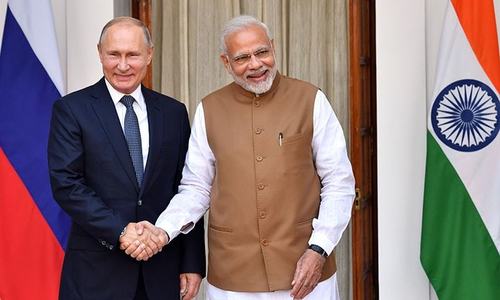
India and Russia had earlier this month signed a $5.43 billion deal for five S-400 ‘Triumf’ missile systems. The deal is being dubbed one of the biggest defence deals recently signed by India.
Says Pakistan compelled to develop capabilities that render defence systems ineffective
Russia would begin deliveries of the missile systems to India by the end of 2020.
India has been working on the development of a multi-layer ballistic missile defence system for a few years now. Besides S-400 deal, India has large-scale cooperation with Israel for BMD development.
Analysts, however, believe that despite heavy investments in developing anti-ballistic missile systems, India may not be able to fully defend itself from strikes by Pakistani missiles in a conflict.
It is feared that the development of anti-ballistic missile systems may give Indian strategists a false sense of security when contemplating military action against Pakistan with the belief that they can take care of an incoming missile.
The possession of such a system could also increase pre-emption tendencies among Indian military planners. Moreover, with the short missile flight time between India and Pakistan, it will be impossible for intercepting incoming missiles.
The FO statement while questioning the effectiveness of the planned BMD said Pakistan had been compelled by Indian attitude “to develop capabilities which render any BMD system ineffective and unreliable”.
It further said that Pakistan remained fully confident of its ability to address threats from any kind of destabilising weapons system.
Pakistan’s National Command Authority had last year specially pointed out the development of Ababeel Missile System that is equipped with ‘Mirv’ capability to defeat BMD. The NCA had described the attainment of Mirv capability as “technological sophistication of Pakistan’s strategic capabilities”.
Published in Dawn, October 20th, 2018