Police on high alert ahead of Indian temple opening to women

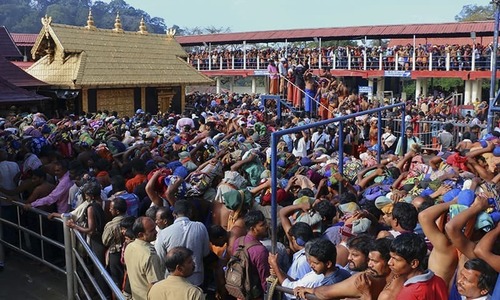
India deployed hundreds of police on Tuesday in southern Kerala state where protesters have threatened to stop women from entering a Hindu temple, despite a court ruling they can pray there.
India's Supreme Court in September overturned a prohibition on women of menstruating age, between 10 and 50, from entering a temple for the deity Ayyappa.
Activists have said the long-standing ban reflected an old but still prevalent belief that menstruating women were impure.
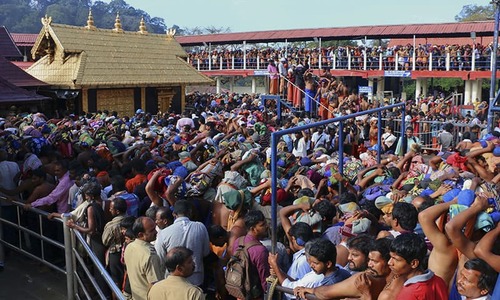
The landmark ruling will take effect from Wednesday and for the first time allow all female pilgrims to enter the temple, considered one of the holiest for Hindus and visited by millions of devotees each year.
But tensions have escalated in Kerala ahead of the day, with thousands marching against the court's decision and warning of bigger disruptions if the temple's traditions were not protected.
Mobs stopped cars from approaching the temple on Tuesday to demand women of menstruating age turn back, reported the Press Trust of India.
Hundreds of additional police had been put on high alert across the state to protect devotees, authorities said.
“Things are under control, and we are closely monitoring the situation,” Kerala police spokesman Pramod Kumar told AFP.
Women are permitted to enter most Hindu temples but female devotees are still barred from entry by some, despite intensifying campaigns by rights activists against the bans.
“It is our constitutional right, and we will stand up for it,” said Trupti Desai, an activist who planned to visit the Ayyappa temple despite receiving death threats. “People are trying to bully me but I am not scared.”
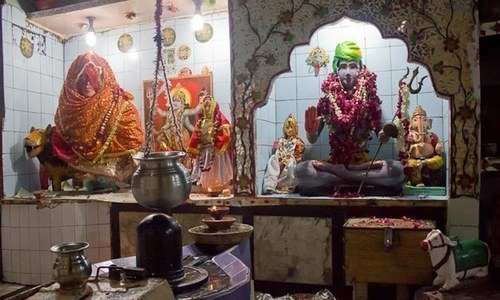
Two years ago, activists successfully campaigned to end a ban on women entering the Shani Shingnapur temple in Maharashtra state.
Women were also permitted to enter Mumbai's Haji Ali Dargah mausoleum, a Muslim place of worship, after the Supreme Court scrapped a ban in 2016.
Devotees opposed to the last month's court ruling have argued that it affects the core belief of the decentralised Hindu temple system, where deities have certain rights.
Prime Minister Narendra Modi's Bharatiya Janata Party (BJP) and its allies have supported marches in different parts of Kerala over the last few days.
The BJP, a Hindu nationalist outfit, has historically been on the margins of state politics in Kerala, but vowed “a massive agitation plan” in the state if the ban on women entering temple was not reimposed.