Ban on full-face veil in Denmark draws ire of rights activists


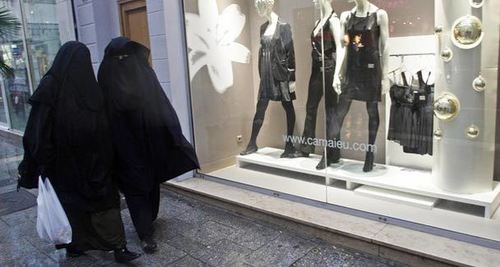
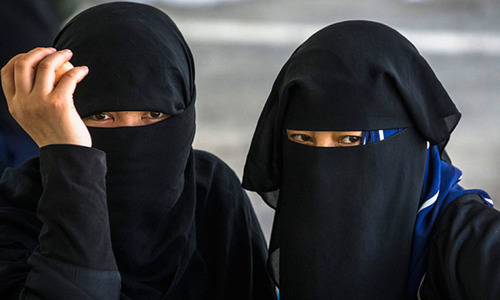
STOCKHOLM: Denmark’s controversial ban on the Islamic full-face veil in public spaces came into force on Wednesday as women protested the new measure which fines anyone wearing the garment.
Human rights campaigners have slammed the ban as a violation of women’s rights, while supporters argue it enables better integration of Muslim immigrants into Danish society.
Protests against the ban were planned in the capital Copenhagen and the second-biggest city Aarhus late on Wednesday, with several hundred people expected to attend, some of them wearing the full-face veil.
A spokesman for the Copenhagen police said they did not plan to fine the protesters who violated the ban.
Wearing a burqa, which covers a person’s entire face, or the niqab, which only shows the eyes, in public will lead to a fine of 1,000 kroner ($156, 134 euros).
The ban also targets other accessories that hide the face such as balaclavas and false beards. Repeated violations will be fined up to 10,000 kroner.
A 30-year-old Muslim woman interviewed in daily Berlingske, identified only as Sarah, said she had “lost faith in the system”.
Born and raised in Denmark by parents who emigrated from Turkey, she has worn the niqab since she was 18.
“I’ve realised that democracy doesn’t work. Politicians boast of freedoms and rights when they are making fun of Muslims and when they are drawing caricatures of the prophet. But when it comes to me, they take away my right to choose how I want to dress,” she said.
“I have come to the realisation that Muslims don’t have the same rights as others. So much of politics is hypocritical.” It is not known how many women wear the niqab and burqa across the country.
“I don’t think there are many who wear the burqa here in Denmark. But if you do, you should be punished with a fine,” Justice Minister Soren Pape Poulsen was quoted as saying by Ritzau news agency in February when the government presented its proposal for the ban.
It said at the time that the burqa and niqab were not “compatible with the values and sense of community in Danish society”.
But Sarah said that instead of enabling Muslims to integrate Danish values, the ban risked having the opposite effect of increasing segregation.
“When the mosque is one of the few places where we can (wear veils), then I think the law will mean that more people will go to the mosque.”
‘Mockery of freedoms’: Amnesty International on Wednesday condemned the law as a “discriminatory violation of women’s rights”, especially against Muslim women who choose to wear the full-face veils.
“If the intention of this law was to protect women’s rights it fails abjectly. Instead, the law criminalises women for their choice of clothing - making a mockery of the freedoms Denmark purports to uphold,” Deputy Europe Director Fotis Filippou said in a statement.
“Whilst some specific restrictions on the wearing of full face veils for the purposes of public safety may be legitimate, this blanket ban is neither necessary nor proportionate and violates women’s rights to freedom of expression and religion,” he added.
The full-face veil is a hot-button issue across Europe.
Last year, the European Court of Human Rights upheld a Belgian ban on wearing it in public.
France was the first European country to ban the niqab in public places with a law that took effect in 2011.
German lawmakers approved a partial ban on “covering the face” last year.
Published in Dawn, August 2nd, 2018