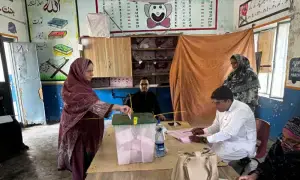
IT seems that with the approach of election day, there is growing evidence of aspiring women candidates getting a raw deal from political parties. In a few instances over the past few days, tickets have been actually taken back from women candidates and handed over to men, who are regarded as more likely to win the contest. These women left out at the last minute have joined the ranks of others like them who have been conveniently ditched by their parties in the run-up to the polls. In an overwhelming majority of cases, the sidelined women have paid the price of not belonging to influential families. Even in cases where women candidates have been nominated, it is usually because of the non-availability of suitable male aspirants within the family. The cynical view is that we can only have women nominees when and if the traditional influential families are forced by some internal compulsions, such as no male relative eligible to contest, to allow them to participate. In that context, some have gone as far as to praise a Pervez Musharraf-era clause that barred those who did not posses at least a Bachelor’s degree from taking part in the polls. That was an unfair condition, although it did force many families to field younger-generation candidates in the 2002 general election, among them some women.
The tokenism of today — which has the political parties grudgingly agreeing to a sprinkling of women candidates in the contest — is no doubt disheartening. The presence of women on the electoral board is in no way commensurate with their potential and their rightful share in running the affairs of this country, of which politics and elections are an integral part. Yet there are signs which need to be built upon until a more reasonable gender-based ratio among the election candidates can be achieved. One aspect of the campaign so far is that the protests against this anti-women bias are now far stronger than they had been during previous elections. Consequently, parties have been on the back foot trying to defend their pro-men, pro-patriarchy decisions, often conceding just how unreasonable some of their last-minute constituency solutions have been in the context of women candidates. This should be an incentive for those looking for some kind of gender balance, if not gender equality, to push ahead with their demands. The lords sitting over the masses are not going to yield unless pressed hard enough.
Published in Dawn, July 1st, 2018