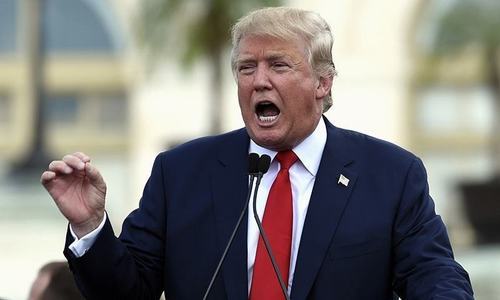
US PRESIDENT Donald Trump’s freewheeling Twitter habit has caused a fresh eruption in Pak-US ties in the new year.
Mr Trump’s rough and undiplomatic language has sparked outrage in Pakistan, but it is not clear if the US president was presaging renewed pressure on Pakistan or simply indulging in rhetorical threats that appeal to his isolationist political base at home.
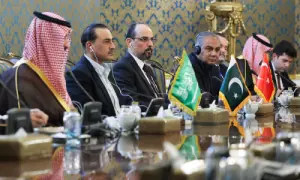
Yet, a hostile, threatening comment by a US president cannot simply be ignored, and Pakistan’s political and military leaderships did the right thing by meeting to discuss a joint civil-military response.
At the very least, Mr Trump’s Twitter salvo aimed at Pakistan suggests that he does not mind further undermining Pak-US ties — a situation that ought to be of concern for all Pakistanis, regardless of whether they view the US with suspicion or relative warmth.
What is also clear is that Mr Trump, like his predecessors since the US-led war in Afghanistan began more than 16 years ago, views Pakistan through the prism of Afghanistan.
With nearly 16,000 US troops in that country, several thousand of whom Mr Trump himself has sent, the course of the war could have a bearing on the American leader’s presidency. It is on that reality that the Pakistani leadership should focus.
Helping find a path to a political deal between Kabul and the Afghan Taliban would help end the war there and obviate the need for the US administration to lean heavily on Pakistan.
Clearly, what has not been achieved in 16 years will not be achieved soon, but Pakistan should not be distracted from creating the conditions, with the US or perhaps without its initial support, for an eventual peace deal in Afghanistan.
There is no scenario in which crumbling ties between the US and Pakistan, because of intemperate remarks by the US president, are good for Afghanistan, Pakistan or the region.
Admirably, the National Security Committee has struck the right note in its response to Mr Trump’s provocation.
Underscoring Pakistan’s contributory role to the regional fight against militancy and avoiding a slanging match with the US, it has emphasised that Pakistan will continue to seek cooperative solutions to regional problems.
In the past, Pakistan has to its own disadvantage stoked anti-US sentiment as a bulwark against US demands. But anti-Americanism, loudest in the extremist fringe, is difficult to contain once an episode between the US and Pakistan is resolved, and creates further problems inside Pakistan while limiting the room for the state to manoeuvre in the complicated relationship with the US.
Perhaps, as other countries are discovering, the Pakistani leadership has recognised a Trump tweet for what it could be: an outburst that may not eventually figure in the US policy process.
It’s more a testament of the trouble the US is in that a presidential tweet can be regarded as incoherent ramblings.
Published in Dawn, January 3rd, 2018