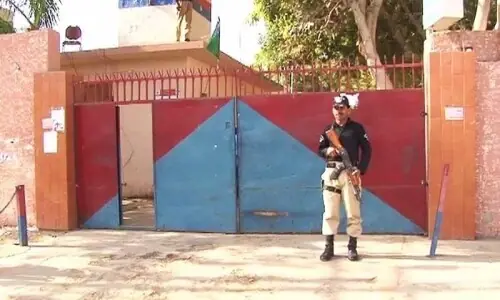
THE anger-inducing reality of Balochistan is that nothing seems to change in the province other than regular additions to the civilian and security death toll. Yesterday, yet more policemen were killed in Quetta in a murky war where the enemy is difficult to identify and the state’s attempts to establish peace and stability appear to have failed. Some provincial leaders, such as Home Minister Sarfaraz Bugti, seem to believe their only job is to denounce either explicitly identified external enemies or shadowy internal threats rather than to assess where the security policy in the province is failing and what can be done to improve it. Mr Bugti and others of his ilk are part of the problem with their predilection for deflecting blame rather than either having the courage to resign or honestly recommending a change in policy direction.
While it remains true that not every attack can be prevented and even the most honest and well-meaning of policies will not lead to an immediate elimination of violence in Balochistan, the military establishment and federal and provincial governments need to urgently recognise that all tiers of security and political policy concerning the province must be reconsidered. If, for example, it is accepted that external actors are fomenting violence in Balochistan, the province has been under the virtual control of a narrow security-minded policy framework for more than a decade. Why, then, has a relentlessly hawkish perspective not been able to eliminate violence with origins and an external dimension that the state believes it is fully informed of? And if the violence is locally organised, how is a state that has undertaken vast counter-insurgency and counterterrorism operations across the country unable to bring a degree of peace and stability in Balochistan?
If there is a possible answer, it appears to lie in a state that is unwilling to allow the constitutional scheme and chain of authority to work in the province. The militarisation of security policy in Balochistan and the sidelining of any civilian provincial or federal leadership that has advocated a policy of dialogue and engagement with domestic and regional elements have resulted in a policy that is unyielding and that has failed to deliver stability. There is no doubt that both external and domestic elements would prefer that Balochistan remain unstable; the more relevant question is what policy mix and improvements in the security apparatus will lead to elements threatening instability in Balochistan to be neutralised. It is surely not enough to know that enemies, domestic and regional, wish harm to Pakistan. What is needed is for this country’s policemen, other security personnel and civilians to be able to live without the constant fear of being attacked. It is necessary and important to mourn the latest loss of life in Balochistan; perhaps it is also time to recognise that other lives can be saved with an honest reassessment of the security policy.
Published in Dawn, October 19th, 2017