• Kulsoom bags 61,254 votes
• PTI’s Yasmin makes inroads into Sharif’s bastion with 47,066 votes
• Despite frenzied campaigns turnout stands at 33pc
LAHORE: The political culmination of the Panama Papers saga played out in one of the most hotly contested by-elections in the country’s history with the Pakistan Muslim League-Nawaz (PML-N) retaining the National Assembly constituency of NA-120, Lahore III, despite tough resistance from the Pakistan Tehreek-i-Insaf (PTI).
While the PML-N candidate and former first lady Begum Kulsoom Nawaz Sharif’s victory with 61,254 votes in the by-election is likely to impact the larger political environment of the country, the large number of votes bagged by the PTI’s Dr Yasmin Rashid — 47,066 — could be taken as a harbinger of the PML-N’s crumbling base in NA-120.
Dr Rashid had earlier given former prime minister Nawaz Sharif a tough time in the 2013 general elections with a margin of defeat of 40,000 votes, which has now been narrowed to a figure closer to 14,000.
Independent candidate Yaqoob Sheikh, backed by the new entrant Milli Muslim League, came third with 4,268 votes, while Pakistan Peoples Party’s Faisal Mir could only clinch 2,692 votes. The Jamaat-i-Islami’s candidate, Ziauddin Ansari, secured only 105 votes. It is interesting to note that these five candidates were all ‘outsiders’ as none of them was registered as a voter in the constituency.
Sunday’s polling activities, which began at 8am and ended at 5pm, remained largely peaceful throughout the day. However, despite dedicated efforts by all political parties to mobilise people, voter turnout was low at around 33 per cent: only 115,698 voters out of a total 321,786 exercised their right to franchise.
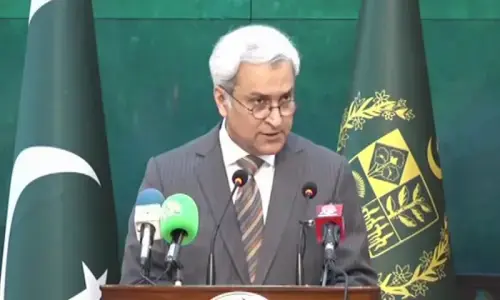
Federal Minister Khawaja Saad Rafiq claimed that thousands of PML-N supporters were unable to cast their votes because the Election Commission of Pakistan had refused to extend the polling time, despite repeated reports that most voters were leaving their homes later in the day, and that the polling process was taking three times longer than usual because of the cumbrous ballot paper.
The PML-N also alleged that many of its supporters who were carrying the parchee (slips with voter numbers on them) were being told by the polling staff that their votes had not been included in the list.
All of NA-120’s 220 polling stations had been declared sensitive. Uniformed forces patrolled the streets throughout the day while a central monitoring cell, set up at the Data Darbar Complex, monitored the polling process with the help of CCTV cameras installed at all polling stations.
Barring a couple of reports of brawls between the PML-N and PTI workers, there was no untoward incident reported from the constituency. However, intermittent sloganeering ‘matches’ would break out between rival political parties, especially those with polling camps pitched right next to each other. Needless to say, the shouting matches would get louder and rowdier every time TV cameras descended on the crowds. Law enforcers had to step in a few times to break up brawls and prevent these shows of muscle strength from escalating.
To the surprise of many, the ruling PML-N alleged that around 60 of workers, including the chairmen of eight union councils in NA-120, had been picked up by law-enforcement agencies the night before polling day.
In an interview on a TV programme, Punjab Law Minister Rana Sanaullah said that these arrests had not dispirited them, and Mr Sharif told the media in London that they were closely watching all the developments.
Since polling day had fallen on a Sunday, the voter turnout remained extremely slow in the first half of the day, and it only picked up pace in the afternoon. There had also been a few complaints of delays at the start of polling, but the ECP denied these reports.
Notwithstanding the ECP’s notices to various public office-holders for violating the code of conduct, Punjab Ministers Mujtaba Shujaur Rehman, Khawaja Imran Nazeer and Khawaja Salman Rafiq visited the constituency even though they were not allowed to enter polling stations.
Within the polling stations, the army had strictly implemented the code of conduct and barred anyone, not just the media, from carrying cameras, cell phones and even handbags into the polling booths. In some places, voters were seen queued up under the unrelenting afternoon sun as there was no shelter or shade available for them.
Though the election laws had banned the provision of transport by candidates to voters, a large number of pick-up trucks, auto-rickshaws and motorcycle-rickshaws were seen milling in the narrow streets to transport voters from their homes to polling stations.
The JI appeared to have accepted a resounding defeat by noon as most of its polling camps were deserted by that time.
Published in Dawn, September 18th, 2017