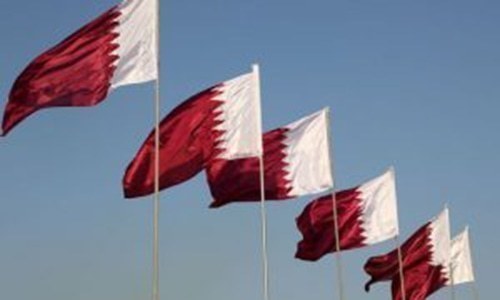
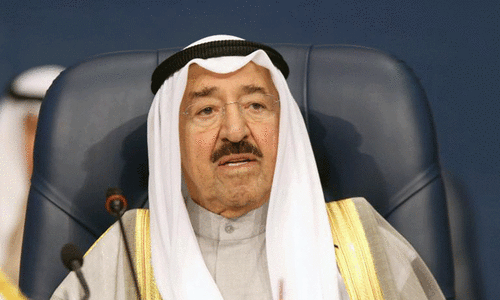
As the boycott of Qatar by a Saudi-led bloc of countries approaches its 100th day Wednesday, experts have warned the increasingly bitter dispute could last into 2018 and beyond.
“If the present trajectory is anything to go by, I expect this crisis to last well into the next year,” Christopher Davidson, a Middle East expert at Britain's Durham University, told AFP.
Saudi Arabia, the United Arab Emirates, Bahrain and Egypt cut all ties with Qatar on June 5, accusing it of bankrolling Islamist extremists and being too close to Iran.
They closed Qatar's only land border, denying air space to its national airline and suspending maritime links.
The drastic measures led many observers to believe the tiny emirate would have no choice but to yield quickly under the pressure of its key trading partners.
Instead, Qatar denied the charges and portrayed the boycott as an attack on its sovereignty.
On Monday, Qatar's foreign minister Sheikh Mohammed bin Abdulrahman Al-Thani accused the Saudi-led bloc of trying to force Doha “into a state of trusteeship”, echoing his initial response to the crisis on June 7.
Bizarre stalemate
But initial speculation of a military intervention against Qatar has given way to an increasingly bizarre stalemate, with state-backed media outlets and PR firms playing a major role.
Saudi contacts with an obscure Qatari sheikh in August triggered speculation he was being used to undermine the Qatari leadership.
Qatar has portrayed itself as victim of human rights abuses, to the bemusement of campaign groups critical of the emirate's treatment of foreign workers as it prepares to host the 2022 football World Cup.
And exiled Qatari opposition figure Khalid al-Hail is set to speak Thursday at a mysterious conference in London entitled “Qatar, Global Security and Stability”.
Kristian Ulrichsen, a Gulf analyst with the Baker Institute at the US-based Rice University, said the standoff was not likely to end any time soon.
“The sense of bitterness and betrayal on all sides is so great, and nobody wants to be seen to be the one who blinked first,” he said.
“The 2014 diplomatic spat (when Bahrain, the UAE and Saudi pulled their ambassadors from Doha) lasted for eight months and the current crisis far exceeds 2014 in magnitude, so it is likely to last a lot longer,” he added.
He said the dispute is also damaging the Gulf states' reputations abroad.
“Leaders in the Gulf don't fully seem to understand how the dispute is undermining their reputation as reliable security partners in the West,” he said.
No deal
The crisis has also exposed the West's inability to resolve the conflict, despite the fact all the states involved are western allies and some host vital strategic assets including America's largest Middle East air base.
Earlier this month, US President Donald Trump said a deal could be “worked out very quickly”, but only days passed before a fresh row erupted between Riyadh and Doha.
Some nations appear to be benefitting from the conflict. Oman has seen a 2,000 per cent trade increase with Qatar sice June 5, according to official figures published in Muscat.
Qatar also sees some upsides to the crisis, Ulrichsen said.
“Qatar is 'winning' in the sense that Doha has proved far more resilient and able to withstand the pressure placed upon it than the anti-Qatar quartet initially envisaged,” he said.
But that may not last forever.
The costs of a long-running boycott may eventually take their toll, especially as Qatar prepares to host the World Cup.
Qatar has previously said the majority of up to 1.3 million fans visiting in 2022 would likely be Saudis, currently banned from travelling to the country.
Regardless of its new-found confidence, Qatar may be forced to blink first, Davidson said.
“The only real way out is for Qatar to agree to the blockading nations' original demands,” he said.
“This is the only practical scenario that will allow Riyadh and Abu Dhabi to sufficiently save face, and that will prevent another crisis emerging further down the line. “