'Still waiting' for Suu Kyi to condemn violence against Rohingya, says Malala


 176
176


Pakistani Nobel Peace Prize laureate Malala Yousafzai has condemned and called for an end to the violence against Myanmar's Rohingya Muslim minority that has forced tens of thousands to flee and left nearly 400 people dead in clashes.
Malala said she is "still waiting" for her fellow Nobel Peace laureate and pro-democracy leader Aung San Suu Kyi to denounce the "shameful treatment" of the Rohingya.
"The world is waiting and the Rohingya Muslims are waiting [for Suu Kyi to condemn the violence]," the girls' education advocate wrote in a Twitter post.
"If their [Rohingya's] home is not Myanmar, where they have lived for generations, then where is it?" she questioned, stressing that members of the minority should be given citizenship in Myanmar.
Malala also urged other countries, including Pakistan, to follow in Bangladesh's footsteps and give shelter to the Rohingya fleeing violence.
The treatment of Myanmar’s roughly 1.1 million Rohingya is the biggest challenge facing national leader Suu Kyi, accused by some Western critics of not speaking out for a minority that has long complained of persecution.
Suu Kyi was awarded Nobel Peace Prize in 1991 and is known worldwide for her decades of long struggle for democracy.
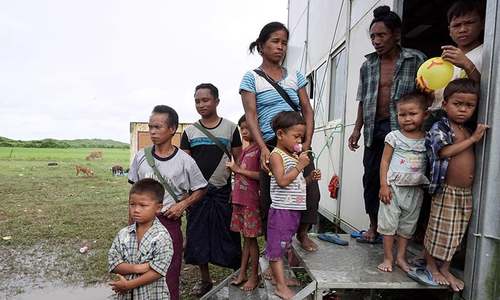
Aid officials said relief camps were reaching full capacity as thousands of Rohingya refugees continued to pour into Bangladesh on Sunday fleeing violence in western Myanmar.
Some 73,000 people have crossed the border since violence erupted on August 25 in Myanmar's Rakhine state, said UN High Commissioner for Refugees spokeswoman Vivian Tan.
The violence and the exodus began after Rohingya insurgents attacked Myanmar police and paramilitary posts in what they said was an effort to protect their ethnic minority from persecution by security forces in the majority Buddhist country. In response, the military unleashed what it called “clearance operations” to root out the insurgents.