5
5


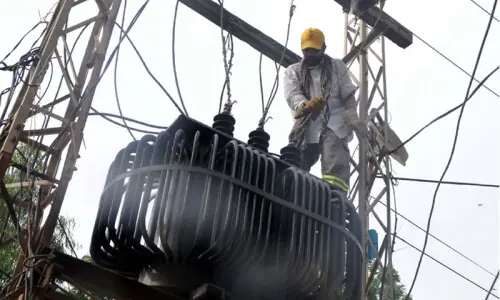
LAHORE: The newly constructed 220kV transmission line successfully evacuated 338MW from the new Jhimpir wind cluster in Sindh and added it to the national grid on Wednesday.
The 85km long 220kV transmission line, which has been constructed by the National Transmission and Despatch Company (NTDC), originates from Jhimpir and concludes at Tando Muhammad Khan Road (Hyderabad) via Jhirk. It also passes over Indus River (lower stream).
Besides construction of the new 220kV line, the capacity of 132kV Tando Muhammad Khan grid station was also enhanced to 220kV, according to officials.
According to a spokesman of the NTDC, the completion of line and capacity enhancement of the Tando Muhammad Khan grid will not only bridge the local demand and supply gap in the area but also end low voltage, fluctuations and tripping problems faced by the masses.
“The development will benefit a number of consumers of the Hyderabad Electric Supply Company (Hesco) and other parts of the Sindh province,” the spokesman said while talking to Dawn.
A total of seven wind power plants have been constructed in new Jhimpir cluster. These include five plants having 50MW (each) while one is of 30MW and another has 99MW installed capacity. The total installed capacity of these seven plants is 379MW.
A major portion of the total electricity generated by the wind plants would be supplied to Hesco’s distribution system through the national grid while remaining power would be used to fulfill the requirement of other areas, he said.
It may be mentioned that the International Finance Corporation (IFC) had also pledged in May this year to provide $66 million and mobilise further $172m to build the largest wind farm in Sindh. The core objective behind the IFC’s pledge is to help build Pakistan’s largest wind power farm.
The financing to Triconboston Consulting Corporation will help construct and operate three 50-megawatt wind farms. Triconboston is majority-owned by the Sapphire Group, a leading Pakistani industrial group, with significant interests in textile and power sectors.
The project is part of the IFC’s broader efforts to foster private participation in Pakistan’s power sector to increase investments, help diversify energy sources, cut the cost of electricity and reduce the use expensive fossil fuels.
Published in Dawn, August 31st, 2017