0
0

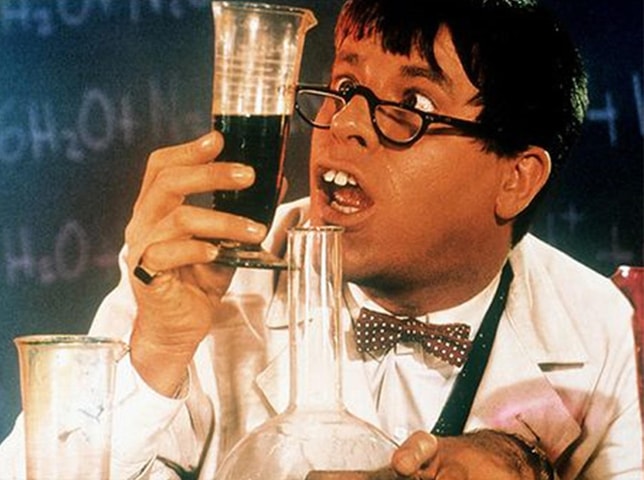
Jerry Lewis, who died Aug 20 at 91, was a comic actor whose rubber-limbed pratfalls, squeaky voice and pipsqueak buffoonery made him one of the most uncontainable screen clowns of all time.
Lewis could be candid and coy, insightful and insulting in the same sentence. He was tireless, demanding and insecure — in his own words “a neurotic, temperamental imbecile.” He could also play the charming child, telling interviewers he never felt more than nine years old.
A struggling comedian at 19, Lewis surged to stardom at 20 after partnering with Martin in 1946 at an Atlantic City nightclub. They made 16 films together, including Jumping Jacks and Artists and Models, and they were major TV stars before breaking up in 1956 at their peak as a duo.
As an actor, Lewis brought an antic joy to hundreds of millions of people who saw him play a role he called “the Idiot,” a cross-eyed innocent who bested bullies despite his nasally voice and gangly appearance.
Jerry Lewis could be candid and coy, insightful and insulting, all at once
The Idiot was the sort of uncontrollable character — falling down laundry chutes, breaking furniture and sputtering at the sight of an alluring woman — that set the loony standard for later generations of comedians, including Jim Carrey and Adam Sandler. The Nutty Professor, Lewis’ 1963 comedy about a shy professor who invents a formula that turns him into wolfish swinger modeled on Martin, was remade with Eddie Murphy in 1996.
With a manic energy that often landed him in hospitals from overwork, Lewis made more than 50 films, countless club and television appearances and several popular recordings. His 1956 version of Rock-a-Bye Your Baby, a song first popularised by Al Jolson, sold more than one million copies.
He debuted as a director, writer and actor in The Bellboy (1960) — a picture set at the Fontainebleau Hotel in Miami Beach — in which he played the hapless title character almost entirely in pantomime. The film was a smash and brought Lewis the cachet to control his next few projects, including The Ladies Man (1961), The Errand Boy (1961) and The Nutty Professor.
As a moviemaker, Lewis was greatly inspired by having worked under director Frank Tashlin, a former animator, on such films as Cinderfella (1960) and The Disorderly Orderly (1964).
Lewis gained the grudging respect of some reviewers in 1983 when Martin Scorsese hired him for a dramatic part in The King of Comedy as a talk-show host kidnapped by a fan (played by Robert De Niro). In Funny Bones (1995), he again won over critics in an unlikable role, playing a comedian who overshadows his son’s comic ambitions.
To some French cinema theorists, Lewis was a “total filmmaker” in the comic moviemaking tradition of Charlie Chaplin and Buster Keaton, who also created and starred in their own projects.
He was born Jerome Levitch on March 16, 1926, in Newark, the son of Jewish vaudevillians who performed at New York-area resorts.
He debuted in 1931, when his parents brought him onstage at a hotel to sing the Depression-era anthem, Brother Can You Spare a Dime?
He once slipped onstage, and his foot went through a footlight bulb. “There was this big laugh, relieved laughter when the audience saw I wasn’t hurt,” he told The Post. “So I went after a second bulb. I’d been hit by the poison dart. I knew how it felt to get a laugh.”
In summer 1946, Lewis was doing his record act at the 500 Club in Atlantic City. When the singer on the bill was fired, Lewis suggested the still-obscure Martin as a replacement. The two had performed months earlier at a New York club and began joking around onstage, to the audience’s delight.
At the 500 Club, their act contained the core of what would excite crowds for the next decade: Martin acting seductively toward women, Lewis doing his utmost to interrupt the singer by breaking plates and drinking water from flower vases. As the Lewis and Martin act grew in popularity, the entertainers signed a movie deal with Hal B. Wallis at Paramount. Wallis started them off in secondary roles in My Friend Irma (1949), based on the hit radio series.
Despite their on-screen chemistry, the Martin-Lewis relationship grew tense. “Jerry, who was supposed to be the funny one, couldn’t stand it if Dean got any laughs,” the writer and producer Norman Lear, who wrote for the team, once said. He said Lewis often got physically ill when Martin stole a scene and balked when writers revealed that Lewis alone was not responsible for the jokes on the show.
The Lewis-Martin split was acrimonious. They did not speak to each other for 20 years, until a mutual friend, Frank Sinatra, prodded them to appear together on Lewis’ muscular dystrophy telethon. Dean died in 1995.
After a long run of successes without Martin, Lewis saw his film career plummet in the late 1960s amid audience demand for more topical humour. Studio officials balked at his insistence on total creative control.
Further problems developed in the 1970s. A chain of cinemas he owned went bankrupt, and he wrestled with addiction to painkilling drugs to treat a back injury. The physical pain reportedly left him on the verge of suicide.
Lewis’ movie career went fallow after filming what he considered his unreleased masterpiece. The movie was The Day the Clown Cried (1972), in which Lewis played a concentration camp clown who entertains children as they are led to the gas chamber. Considered by those who have seen it as one of the most offensive films ever made, the film was indefinitely withheld from release amid lawsuits among its backers and writers.
Lewis remained a television star as host of muscular-dystrophy telethons, for which the Academy of Motion Picture Arts and Sciences recognised the actor with its Jean Hersholt Humanitarian Award in 2009.
Lewis and the Muscular Dystrophy Association parted ways in 2010, under circumstances that remain vague. Five years later, the association said it was ending the telethon for good.
In 1995, Lewis had an acclaimed stage role as the Devil in the musical Damn Yankees! At 40,000 dollars a week, he reportedly became the highest-paid performer on Broadway at the time.
At this late-career peak, Lewis was still unpredictable in interviews — clowning with a slightly menacing touch. “Let’s put it this way,” he told a Post reporter. “You will remember we met.” He then threatened to cut the reporter’s tie. He was half-joking.
By arrangement with The Washington Post
Published in Dawn, ICON, August 27th, 2017