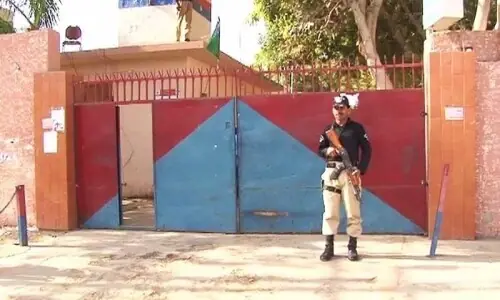
WHEN a high-profile kidnapping takes place in broad daylight in one of the most heavily policed urban centres in the country, questions are bound to be raised. On Tuesday afternoon in Quetta, two Chinese nationals, a man and a woman who run a language centre in the city’s affluent Jinnah Colony, were forced into a car without a number plate by three armed men who then drove away firing their weapons in the air. Another Chinese woman managed to break free and ran back into the centre. When a passer-by, a commendably brave one at that, intervened, he was shot and injured. So far, no one has claimed responsibility for the abduction.
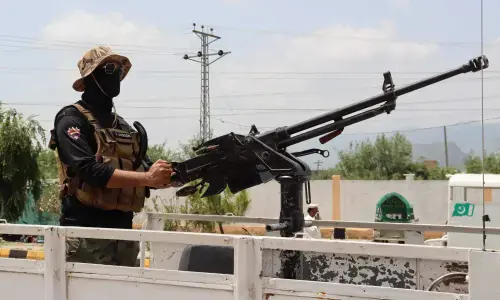
The incident underscores the precarious security situation in insurgency-wracked Balochistan as well as the murky transnational interests that complicate matters there. The province has seen a number of acts of terrorism since the Aug 8, 2016, suicide bombing in Quetta that killed scores of lawyers. On Oct 24, militants stormed the police training college in the provincial capital, killing around 60 young cadets. In November, a suicide bombing at the Shah Noorani shrine left at least 50 people dead. On April 13 this year, 10 labourers were shot dead at a construction site, and on May 12, a suicide attack targeted the convoy of the deputy chairman, Senate, Maulana Ghafoor Haideri in Mastung. The cleric sustained injuries, while close to 30 people lost their lives. Those who have claimed responsibility for these attacks include Baloch insurgents, and various Islamist outfits including the militant Islamic State group, Jamaatul Ahrar, etc; there are also a number of shadowy criminal groups in the province with links — sometimes tenuous, at other times not — to extremist organisations. Balochistan today is a confoundedly complex problem, a powder keg of competing interests, the outcome of a decades-long failure of state policy marked by a refusal to honestly address the political grievances — some of them very legitimate — of the Baloch; that omission is being exploited by subversive foreign elements with some success. Arguably, the inception of CPEC has made the situation even more fraught, with security for Chinese nationals acquiring particular urgency. The abduction two days ago is evidence that law-enforcement authorities in the province have yet to get their act together. It is pertinent to ask how, in a city with an overwhelming security footprint, did the perpetrators get away with such a brazen crime?
Published in Dawn, May 26th, 2017