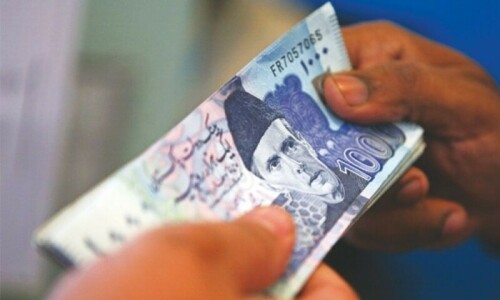
TO the relief of farmers, the domestic rice market is finally looking up. The paddy prices (basmati) have risen by almost 50pc over a year — from Rs1,500 per maund to current Rs2,200 per maund — and are still climbing.
With the cost of production down because of the subsidy package and the market prices going up, the farmers see some silver lining for the next season. Since the nursery sowing time starts by the end of April, the country may see some rise in rice acreage.
And the hope for a better basmati crop has come from China. Traditionally consumers of coarse varieties, the Chinese have lately started importing basmati as well. In November 2016, they formally certified 14 Indian factories for importing the variety.
According to basmati market watchers, China, with its increasing middle class and changing dietary habits, is now opting for finer and expensive rice varieties — and basmati becomes the natural choice
According to the basmati watchers, China, with its increasing middle class and changing dietary habits, is now opting for finer and expensive rice varieties — and basmati becomes the natural choice.
However, none of the Pakistani processing factories so far gone through the certification process. According to market reports, some containers bringing import items from China are stuffed with the basmati rice on their way back. The Basmati Growers Association (BGA) recently wrote to the Ministry of Commerce to take the matter of certification up with the Chinese authorities. The REAP feels that price improvement has come from two sources: Iran and the changing pattern of sowing.
Though, coarse rice varieties are still being preferred by the Chinese, the price of basmati has improved. The recent opening of the Iranian market, which absorbs over 70pc of total formal and informal exports, has given a big boost to Pakistan’s domestic market prices.
The other factor is that a new variety (1121), which is also treated as basmati, though not super basmati, has taken over more than 32pc of the sowing area, eating directly into the super basmati acreage. With sliding super basmati production and the rising Iranian demand for it, it is natural for the price to go up.
The Pakistani basmati has had a tough time recently: exports dropped by almost 70pc — from 1.2m tonnes to a paltry 400,000 tonnes while the Indian exports rose simultaneously from 1.2m tonnes to over 4m tonnes.
Pakistan produces world class rice and has a well developed rice processing industry as proved by its exports to high-end and the most sensitive markets around the world. However, one of the major weaknesses of Pakistani basmati has been its brand development.
China, with its massive and relatively easy market, offers a unique opportunity to develop such brands then spread them across the region.
Published in Dawn, Business & Finance weekly, April 24th, 2017