LAHORE: The trend of marriages between cousins, within a clan or caste should be discouraged as the number of children suffering from a group of genetic diseases, called Lysosomal Storage Disorder (LSD) in medical terminology, is on the rise.
Such children do not survive more than five years if not diagnosed and treated as early as possible. Treatment of LSD changes outcome from miserable death to a near normal but it is very expensive.
This was crux of speeches delivered by a panel of experts at a workshop arranged at Children’s Hospital by its Department of Paediatric Gastroenterology and Hepatology on Saturday.
The panel of experts comprised retired Maj Gen Prof Dr Salman Ali, an adviser to armed forces on paediatrics; Prof Dr Huma Arshad Cheema, the head of Children’s Hospital Paediatric Gastroenterology and Hepatology; Prof Tahir Shamsi, the project director of Bone Marrow Transplantation Center at Children’s Hospital; Dr Hani Akbar Rao and Dr Fareedudin.
The panel of speakers urged the government to take a step forward and support these patients by developing a policy for LSD.
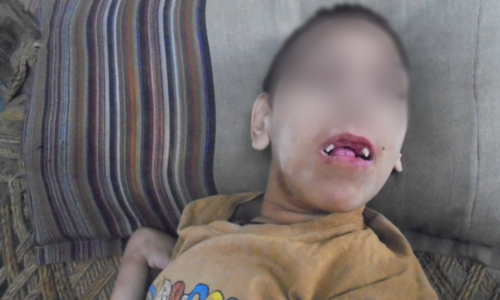
Prof Dr Huma Arshad Cheema said LSD was caused by defect in special enzymes required to break down certain waste products in the body and the defect led to interference with normal cellular function. The symptoms include abnormal bony changes, recurrent chest infections, enlarged liver and spleen and Central Nervous System manifestation.
“The severity of disorder varies but symptoms start appearing as early as one year of age. Due to lack of awareness, diagnosis is often late and the affected children die at young age,” she said while adding that family members of patients suffering from LSD have now started efforts to reach out to the government and other institutions for their support so that their children could get the required treatment and lead a normal life.
Dr Hani Akbar Rao while presenting an overview about the recent advancement of LSD in Pakistan said that every year more than 250 children are diagnosed with the disorder. Previously, it was challenging to diagnose LSD in Pakistan and the samples had to be sent to the US, the UK, Germany, Australia and India and the reports received after three to four months.
“Now, free testing facilities are available at major teaching hospitals at Karachi, Lahore, Islamabad and Multan,” she said, urging the government to set up more facilities for screening, early and accurate diagnosis, appropriate enzyme therapy and rehabilitation of the LSD patients.
Prof Dr Salman Ali said emphasis should be laid on creating awareness among people about LSD. Coordinated efforts by doctors, the government, philanthropists, NGOs, patients’ families, pharmaceutical companies and patient support groups were needed to combat LSD.
“The need of the hour is that the government should work out a scheme to provide free treatment to such patients, as the number of cases with such disorders is few and manageable at present.
“The government should also ensure availability of enzyme therapies for the treatment of affected children, so that they might lead as normal a life as possible, and contribute to the welfare of the country as responsible citizens,” said Prof Ali.
Dr Fareedudin said centres should also be set up for diagnosing these disorders during pregnancy so as to limit the number of affected infants being born with the disorder.
Entomologists: A delegation of entomologists will be visiting Turkey from next week for benefiting from the knowledge and expertise of Turkish experts in the field of vector-borne diseases.
The second batch of 20 nurses will also be leaving shortly to attend a training course in Turkey, said Specialized Healthcare and Medical Education Department Secretary Najam Ahmed Shah here on Sunday while giving details about the ongoing collaboration between the Ministry of Health Turkey and the Punjab Health Department.
Mr Shah said the Pak-Turk Health Week was observed at Recep Tayyip Erdogan Hospital, Muzaffargarh, and Nishtar Hospital, Multan, in connection with the Pakistan Day celebrations. From March 18 to 26, Turkish doctors examined patients having orthopedics, urology, neonatology and infection diseases.
Published in Dawn, March 27th, 2017