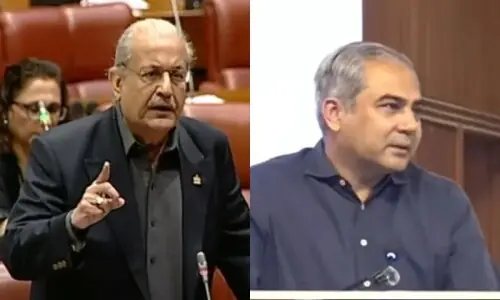
WHEN women unite, they can be a formidable force for change. In countries like Pakistan, divisions among them only work to the advantage of those who want to maintain a patriarchal status quo. On Wednesday, acrimony between the founder and current head of the Women’s Parliamentary Caucus brought to the fore some recent concerns about this primary forum for women parliamentarians. In an impassioned speech in the National Assembly, WPC Patron and PPP MNA Dr Fehmida Mirza expressed her dismay over the sidelining of the body in recent months. She also appeared to imply that its currently moribund status was a result of personal rivalries among its members. The WPC secretary, PML-N MNA Shaista Pervaiz, responded by acknowledging the WPC’s achievements but added that women in the opposition did not reciprocate the support that was extended to them.
The previously united front presented by women legislators under the WPC over the past several years appears to be taking an unfortunate and self-defeating trajectory which threatens to diminish its enormous, and proven, potential. Arguably among the most promising developments in Pakistan’s parliamentary history, the caucus was established in November 2008 under Dr Mirza following her election as speaker of the National Assembly. The impact of women legislators working across the aisle under the WPC’s umbrella can be gauged by the unprecedented amount of pro-women legislation enacted and bills introduced over the next few years. These included the anti-harassment act in 2010, which was the first instance where women legislators worked very closely with women’s civil society organisations from the initial drafting stage through to the passage of the law. Among other women-friendly pieces of legislation during this period were amendments to the Pakistan Penal Code dealing with acid crimes and regressive cultural practices. Last but not least, the National Commission on the Status of Women was established through an act of parliament in 2012 as an empowered, autonomous body — a significant step towards institutionalising gender equality in the government’s policies and programmes as well as the laws that affect women. This flurry of lawmaking was driven by women legislators who set aside their political differences and worked across party lines to lobby their male counterparts and push through legislation that will have a salutary effect on the lives of generations of Pakistani women.
However, as reports of egregious violence against women continue to surface, it is clear that a great deal remains to be done. For one, the long-pending anti-rape and anti-honour killing bills need to be passed by a joint sitting of parliament. The current WPC should carry the baton forward and set the tone for the provinces instead of allowing political considerations to stall momentum. They must give Pakistani women a voice in the corridors of power.
Published in Dawn, September 9th, 2016