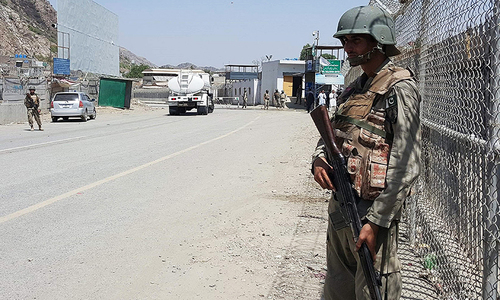
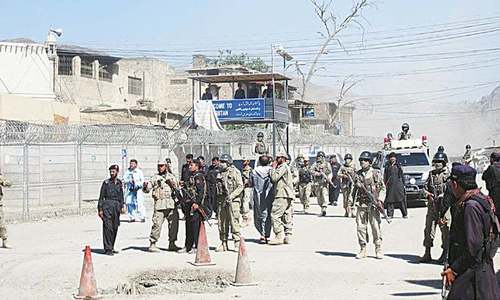
The exchange of fire between the border security personnel of Afghanistan and Pakistan at the Torkham crossing was an eruption that needed to be quelled quickly by both sides and that must be handled sensibly if it recurs.
Border management and overall tensions in the Pak-Afghan relationship appear to be driving the two sides apart at the moment.
Tensions in Torkham began with a Pakistani decision to finally go ahead with new border-control measures that involved new fencing on either side of the crossing and gates to regulate the flow of people and vehicular traffic.
Initial tensions, which led to the closure of the border crossing several weeks ago, appeared to have been resolved, causing the Pakistani side to resume work on the new infrastructure that will be used at the crossing.
However, the resumption of construction elicited a military response from the Afghans — a response that Pakistani officials have credibly suggested was rooted in growing Afghan hostility towards Pakistan and political divisions in Kabul.
Driving the Afghan government’s animosity is certainly the collapse of the yet-to-begin peace process with the Afghan Taliban and the perception in some quarters there that Pakistan is aiding the fighters more than it is trying to help Kabul stabilise the country. But there are also rival political camps at work, with former president Hamid Karzai leading a group of dissidents who appear to want the state to declare Pakistan an enemy rather than a partner or an ally of Afghanistan.
According to Pakistani officials, following the eruption of tensions at Torkham late last month, there was an effort made to once again seek Afghanistan’s cooperation and assent in the border-management plans that the Pakistani security establishment is promoting.
The controversial handover to Afghanistan of a check post in Angoor Adda appears to have been a part of Pakistan efforts to find collaborative and constructive solutions to border-management issues.
Yet, what one part of the Afghan government agrees to, another often tries to undermine — leading to the violence at Torkham that left several people dead this week.
Military conflict cannot and must not be the answer. What Pakistan needs to do is redouble its military, diplomatic and political outreach to Afghanistan and find urgent and durable solutions. Is Afghanistan fundamentally opposed to border management?
Are Afghan officials willing to use anything, even scupper sensible ideas, to express their annoyance with Pakistan over the stalled peace process?
Should intra-Afghan political rivalries be allowed to spill over into the wider Pak-Afghan relationship?
The Afghan leadership has many questions to answer at the moment. What Pakistani officials should refrain from, however, is responding in the same manner.
Pugnacious and aggressive statements by Pakistani leaders are unhelpful and unnecessary.
Common sense can prevail again — if leaders on both sides act to calm rather than stoke tensions.
Published in Dawn, June 16th, 2016