PESHAWAR: It has been almost a year since UKAID-funded ‘Aitebaar’ project launched a provincial Government-Citizen Forum (GCF) in collaboration with Khyber Pakhtunkhwa government ‘to engage government and citizens’ on strengthening security and justice.
The representatives of citizens, including people from private sector, academia, media, minority and civil society, were picked by the provincial government. The home department supposedly ‘owns’ this initiative and expects to do so once the British pounds stop pouring in.
It sounds amusing that a four-year foreign funded project was needed to remove trust deficit between government and its citizens since government should itself remove it through service to public. It sounds that easy but once a citizen peeps into the ways and mindset of bureaucracy one would know why there is so much mistrust between the two.
Take for example the senior official of the home department who chaired the GCF first meeting. He, who pledged things on behalf of government soon after the meeting, was nabbed by National Accountability Bureau allegedly for embezzlement of public funds. Can public trust words of such officers -- it is a thing to ponder.
If those were only words and one should judge a person or official in this case by actions, meeting up with officials to know implementation status on ‘action points’ finalised by the GCF was nothing but another meeting for more action points to implement the previous action points.
Too much emphasis on ‘action’ even did not spur the government officials into action.
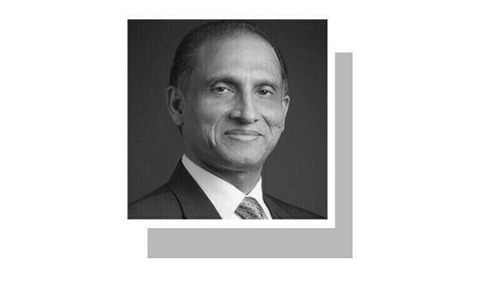
Appearance of high-ups was rare as mostly low-rank officers attended the meeting. However, recently in a meeting on security issue of the educational institutions, a senior official Afzal Latif, an official whom Pakistan Tehreek-i-Insaf government seems to think indispensable for reforms in education sector, graced the meeting with his brief appearance. Yet his presence did not much enrich the GCF meeting rather it left some members enraged.
The secretary in a bureaucratic manner shifted the entire responsibility of answering questions regarding educational institutions security to the absent inspector general of ‘model police’ of KP, who himself had been avoiding meeting with GCF. The senior bureaucrat in a discourteous manner left without answering the questions of GCF having two former education ministers and academics as members.
Ironically all this happened when secretary of the home department, the parent department of police, jails, prosecution and probation, was chairing the meeting.
Provincial Home Secretary Munir Azam, looking devoid of authority and responsibility, simply kept defending police and secretary education for their absence and called secretary education his ‘dear friend’ even after witnessing his attitude at the meeting.
Later, the home secretary tried answering serious questions raised on security of educational institutions across the province but did not leave an impression.
In an effort to hide weaknesses of the government on issue of security, he stressed on role of community. He talked about things like community policing and public sharing intelligence with the police. He even stressed the need for some mechanism to tackle the monstrous threat of terrorism.
This forced a GCF member and former vice-chancellor of University of Engineering and Technology Peshawar, Eng Imtiaz Hussain Gilani, to point out the Khyber Pakhtunkhwa Sensitive and Vulnerable Establishments and Places (Security) Act, 2015calling it an ‘odious’ law. Like the bureaucracy, this law also shifts responsibility of security of an institution to the owner. Mr Gilani said that such laws should be repealed.
More queries poured in on security and need for government agencies to shoulder the responsibility. Once again home secretary started his mantra of ‘importance of community policing’.
What is the use of having law enforcement agencies with more than a decade long experience in countering terrorism, having stern laws like Anti-Terrorism Act, having a model police and various intelligence gathering agencies if community is supposed to protect itself, one wonders.
How can one trust police to share intelligence with them about criminals and suspected terrorists when one knows that one’s call for help will not be answered when the terrorists strike.
When students and teachers are left to defend themselves -- as was witnessed in Bacha Khan University incident recently-- against well-trained terrorists how would one ever trust government again seeing the irresponsible behaviour of the responsible officials?
How can one trust the government claiming to have announced a National Action Plan when it can’t protect schools and has dumped the responsibility on the owners?
The home secretary did not have any comprehensive answer whether it was regarding failure of police to foil and respond to attacks like that of Bacha Khan University or containing the threat fully implementing the Anti-Terrorism Act, monitoring around 5,000 people registered under Schedule-IV of Anti-Terrorism Act, who posed threat to community.
How would one trust such a government with whom one can’t trust one’s life?
This was just narration of a very recent meeting. There had been many such meetings where officials did not show any interest in answering the queries of the citizens.
“Actions speak louder than words,” they say. The way the officials concerned had been avoiding or leaving meetings in the middle without answering serious questions on law and order and security raised at the GCF it is not hard to assume why citizen don’t trust the government.
Trust or “Aitebaar” is the bedrock for building a strong relationship. Gestures like not being open, denials and being righteous or casual about the problem in any relation never works. It rather leads to further mistrust.
Published in Dawn, March 25th, 2016