0
0

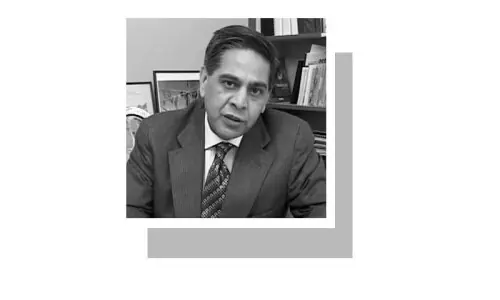
KARACHI: There should be a methodological shift in writing history of the subcontinent in the early 21st century that moves us beyond the dominant frames of maps, territories, nation-state narratives and partition memories, said Prof Dr Yasmin Saikia of Arizona State University in her keynote address at the opening session of the 25th International Pakistan History Conference at Karachi University’s arts auditorium on Tuesday morning.
Titled ‘Trends in South Asian History’, the three-day conference has been organised by the Pakistan Historical Society, History Department of Karachi University, Hamdard Foundation and the Endowment Fund Trust for Preservation of the Heritage of Sindh.
Dr Saikia said the words azadi (freedom), hukumat (governance) and sarkar (authority) were terms of significance in the early 20th century, and their power was such that they became motors propelling the people in the subcontinent to imagine a place beyond colonialism and rise up from their servitude to proclaim themselves azad. She said she would rethink the azadi dreams in its absence in the official narratives of history in the subcontinent.
Three-day 25th International Pakistan History Conference opens
She said the ‘middle actors’ — Fazal Illahi, Obaidullah Sindhi, Iqbal Shedai and Mahendra Pratap — provided the framework of her narrative. She said neither were the four men leaders nor did they belong to any defined political party, but they effectively communicated azadi as both a secular and religious foundation of human identity. Fazal Illahi and Maulvi Obaidullah imagined azadi would bring to fruition a perfect government; the former explicated that as hukumat-i-Illahi (republic of God) and the latter as an egalitarian outcome. Shedai and Pratap imagined social justice and economic wellbeing as the cornerstone of good governance, she said. The azadi dreams projected into the future, she said, should not be mistaken as a hope for utopia; rather, similar to the Derridean approach, they imagined a horizon of possibility for an ethical polity.
Dr Saikia said current studies on the freedom struggle were focused on national political parties, their leaders and subaltern movements; much remained unexplored outside of these perspectives. It’s in that space where the middle actors operated, she added. She said she was suggesting a methodological shift in writing history of the subcontinent in the early 21st century that moved us beyond the dominant frames of maps, territories, nation-state narratives and partition memories.
Raising the question as to what the source of inspiration of the middle actors was, Dr Saikia said she approached the query by engaging the concept of colonializability developed by the Algerian political thinker Malik Bennabi (1905-73). In the subcontinent, she said, pluralism and coexistence of the variety of people had allowed for interaction, borrowing, exchange and transformations. But colonialism destroyed the fabric of plural society and divided people based on religion, language and region, she said.
She then spoke in detail about Fazal Illahi (who in a confidential report sent by L.L. Jenkins on Sept 16, 1918 to the DIG Police of Punjab was described as the ‘most dangerous leader of the jihad movement’) and Iqbal Shedai (who was born in 1888 in Sialkot and his career took shape as an anti-British propagandist in Italy).
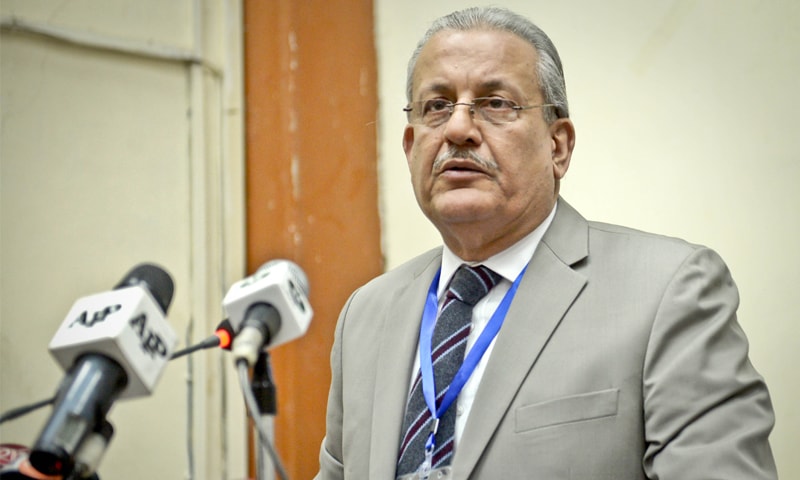
Senate chairman Raza Rabbani, who was the chief guest on the occasion, recalled the time when there used to be shades of the Left and the Right engaged in acrimonious debates at the University of Karachi, but all of that would end in an intellectual discussion. He also remembered when student unions during Gen Ziaul Haq’s rule were thought to cause violence. He said it was fortunate that a history conference was being held in the city, but it had to be seen as to what had changed over the years. “Has anything changed in our society?” he asked. Even at present it’s considered a state crime to go against what’s prescribed by the ruling elite, he said. “The mindset has not changed,” he lamented.
He said it’s the same civil bureaucracy, which was brought up to perpetuate the rule of British imperialism. What’s changed was that kala sahib had replaced the gora sahib, and the kala sahib abhorred the working class people, he said.
Mr Rabbani said the Quaid-i-Azam envisaged Pakistan as a welfare progressive state, tolerant of its minorities, but the country’s character was changed into a national security state.
History was deliberately distorted, he said, adding that he was appalled to see our history books that glorified wars. Then there were those history books which contained chapters on advantages of dictatorship and disadvantages of democracy, he added.
The senate chairman said colonialism had given way to neocolonialism, where the same trends continued, with western powers seeking control over Asia’s resources. He urged the historians sitting in the auditorium that Asia looked up to them to find common threads, because from diversity emerged unity. Referring to, and agreeing with, a point raised by Dr Saikia in her address, Mr Rabbani said when western powers suggested that Islam and democracy was not compatible, they were pandering to the mullah and the ruling elite.
Sadia Rashid, President Hamdard Foundation Pakistan, presided over the event. She mainly talked about the Pakistan Historical Society and its aims, one of which was to develop objective historical studies.
Vice Chancellor of Karachi University Dr Mohammad Qaiser and Dean Faculty of Social Sciences Dr Moonis Ahmar also spoke.
Dr S.M. Taha, chairman of the History Department, Karachi University, delivered the vote of thanks.
Earlier, secretary of the conference Dr Nasreen Afzal welcomed the guests.
Published in Dawn, January 20th, 2016