16
16


NEW DELHI: Rights groups on Wednesday denounced India's new legislation allowing tougher punishments for juveniles, which was sparked by a public outcry over the release of a young man involved in a deadly gang-rape.
Lawmakers on Tuesday passed a bill allowing minors aged 16-18 to be sentenced to at least seven years if convicted of “heinous crimes” including rape, murder and acid attacks.
However, they will not face life imprisonment or the death penalty.
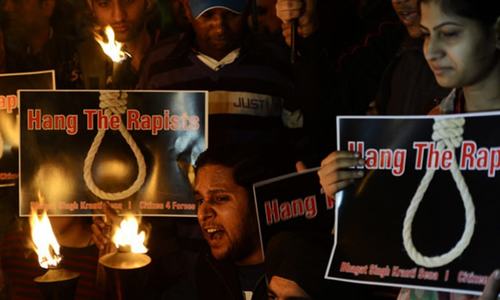
The move came days after the release after three years of the youngest convict in the fatal gang-rape of a medical student on board a bus in December 2012.
The release triggered widespread calls led by the victims' parents for amendments to an existing law which critics said was too weak.
Related: Delhi gang-rapist freed from detention
Amnesty termed the legislative changes “regressive and disappointing”.
“Children do sometimes commit crimes as violent as those committed by adults,” said Aakar Patel, executive director of Amnesty International India, in a statement.
“But the solution is not to change the law. It is to better enforce it. “Under the existing law, those below 18 can be sentenced to a maximum of three years in a reform home. Save the Children accused lawmakers of passing the new bill “in haste under public pressure and without due diligence”.
“Justice cannot be confused with revenge especially after the (2012) rape case. Making ad-hoc amendments using a trial and error method will only make the situation worse,” said Bidisha Pillai, a campaign director for the group's India branch.
The amended bill, which will become law after the president ratifies it, proposes a two-stage process that will first categorise crimes committed by juveniles as petty, serious or heinous.
A minor accused of “heinous” crimes would then be examined by a board of psychologists and social behaviour experts, who will assess whether the defendant should be tried as a child or an adult.
The decision to try the culprit as an adult would have to be approved by a children's court, which would also draw up a plan for rehabilitation.
Critics argue that this bill violates the United Nations Convention on the Rights of the Child, which India has ratified, and which states that all people under the age of 18 must be treated equally.
Also Read: Delhi gang rape: Top court to hear plea against release of juvenile rapist