5
5
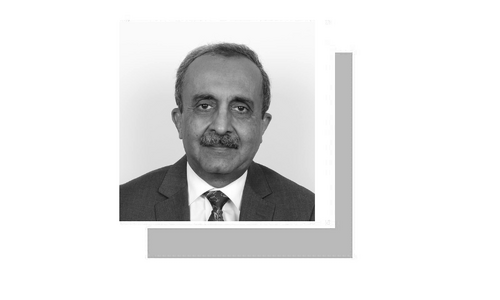
LAHORE: The Institute for Policy Reforms (IPR) released on Wednesday a “fact sheet on mini-budget” that was announced at the end of the fifth month of the current fiscal year.
According to the fact sheet, apparently the objective is to cover the shortfall of Rs40 billion in the FBR revenue for the first quarter which is a precondition to be fulfilled before the release of the next IMF tranche.
The fact sheet raises questions whether this is a precursor of more mini-budgets in 2015-16? What is the strategy for raising the additional resources?
It consists entirely of raising tax rates of indirect taxes, especially customs and excise duties.
“This is tilting the tax system even more towards indirect taxes, which already account for over two-thirds of the FBR revenues. Instead the focus should be on greater austerity in expenditure, especially in non-salary heads, and/or mobilising additional revenues from direct taxes,” it said.
In its first budget of 2013-14, the PML-N government had promised to make a 30pc cut in non-salary expenditure, equivalent to Rs 40 billion. This was not achieved and instead there was an increase of Rs25 billion. It is vital that at this time when budget 2015-16 already contains heavy additional taxation of over Rs200 billion, the emphasis be shifted to reducing non-development expenditure. Otherwise, the growth process in the economy will be adversely affected, it said.
The other option is to collect more from direct taxes and ensure that the incremental tax burden is progressive. One option is to introduce a super tax on banking companies, which are currently making record profits. A one-time levy has been introduced in the latest budget at the rate of 4pc on banks’ income and at 3pc on affluent individuals, AOPs and companies earning more than Rs500 million in tax year 2015.
“The revenues to be generated are earmarked for covering part of the costs of rehabilitation of the Temporarily Displaced Persons. The option was to raise the rate on banking companies to, say 6pc, on high income taxpayers to 4pc and to levy 1pc additional tax on taxpayers with income from Rs250 million to Rs500 million. Combined with the austerity drive, the budgetary position could have been improved by Rs40 billion.”
Instead, what are the measures included in the mini budget? The first step is to increase the customs duty by one percentage point across the board. The second measure involves raising the regulatory duty on luxury good imports by 5 to 10 percentage points. The government is engaged in somewhat contrary moves. While the maximum import duty has been reduced from 30pc to 20pc other regulatory duties are being imposed. In addition, the excise duty is being increased on imported cars and domestically produced cigarettes. The other major source of revenue from the minimum duty is petroleum products. Following the decline in oil prices, not only have the GST rates on these products been raised substantially but also insidiously import duties have been levied. For example, inclusive of a regulatory duty, the import duty on furnace oil has been increased to 8pc and on HSD oil to 11pc.
The levy of additional regulatory duty on so-called ‘luxury items’ raises the total duty to up to 35pc. Most of these items are likely to be smuggled, with such high rates of duty. Some import contraction is possible, but with the prospect of hardly any additional revenues.
“The government is pursuing a policy of punitive taxation to curb smoking in line with WHO’s requirement. However, what is happening is more tax evasion than a reduction in consumption. The reported production has declined by 4pc since June 2014. It is hoped that the indicative target for FBR revenues of Rs750 billion will be met in the second quarter. It will require the achievement of a high growth rate of over 18pc. If there is a shortfall again; will there be another mini-budget in the first quarter of 2016?”
Published in Dawn, December 3rd, 2015