36
36
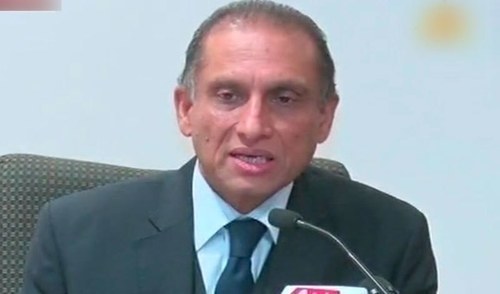
WASHINGTON: Pakistan has made low-yield nuclear weapons to bridge the gap for war that India had created through its cold-start doctrine, Foreign Secretary Aizaz Chaudhry told a news briefing on Tuesday.
This is the first concrete explanation from a senior Pakistani official on how Islamabad plans to deal with New Delhi’s so-called cold-start doctrine, now renamed the proactive strategy. It also is a rare explanation of Pakistan’s decision to make tactical nuclear weapons to deal with the possible threat of an Indian aggression.
Briefing the Pakistani media on Prime Minister Nawaz Sharif’s visit to Washington, Mr Chaudhry also said that Pakistan would not sign any nuclear deal with the United States during the visit.
The prime minister arrives in Washington on Wednesday for a meeting with US President Barack Obama, scheduled for the next day (Oct 22).
Reports in the US media suggest that the Obama administration is trying to persuade Pakistan to sign a nuclear deal, which will enable Pakistan to join the Nuclear Suppliers Group if it agrees to accept certain restrictions on its nuclear programme.
“Our nuclear programme is one dimensional: stopping Indian aggression before it happens. It is not for starting a war. It is for deterrence,” the foreign secretary said.
Explaining India’s cold-start doctrine, Mr Chaudhry said that under this strategy India had already moved its cantonments close to the Pakistani border. This allowed India also to move its conventional weapons close to Pakistan along with other vehicles and fuel supplies.
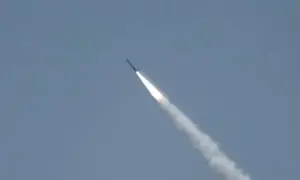
By drastically reducing the time required to launch an aggression against Pakistan, India had “created a space for war,” Mr Chaudhry said. He explained that Pakistan’s “low-yield, tactical nuclear weapons” would make it difficult for India to launch a war against Pakistan while remaining under the nuclear threshold.
“Our argument is, when you are a nuclear power, you do not create spaces for war. War is no more an option,” the foreign secretary said. “We have plugged the gap India had created. We have the right to do so.”
Reports in the US media claim that Washington wants Pakistan to curb its tactical weapons because it fears that such weapons could trigger a nuclear war in South Asia.
Asked under what conditions Pakistan could sign a nuclear deal with the United States, Mr Chaudhry said: “We are not signing a nuclear deal. No deal, not of any kind.”
He also said that there were no preconditions in the US-Pakistan dialogue as such talks reflected a desire for “remaining engaged with mutual respect and understanding.”
The White House too has downplayed reports about a proposed nuclear deal with Pakistan, saying that no such “deal would come to fruition” during the PM’s visit. But the White House Press Secretary Josh Earnest did say that the nuclear issue would be one of the subjects the two leaders would discuss when they meet on Thursday.
Mr Chaudhry said Pakistan was well aware of its responsibilities as a nuclear state and had won international recognition for its efforts to safeguard its nuclear installations.
“We have had no nuclear accidents in Pakistan. We have a very strict export control system. We are proud of our record,” he said, adding: “Our nuclear programme is only to deter aggression against India. That’s the long and the short of it.”
He said Pakistan’s nuclear installations were already functioning under IAEA safeguards and it had taken such measures voluntarily.
In reply to a question about Pakistan joining the Nuclear Suppliers Group, the foreign secretary said the US policy of getting India included in this group was “discriminatory”.
“We encourage the US to have a non-discriminatory approach, a balanced approach,” he said.
Published in Dawn, October 20th, 2015
On a mobile phone? Get the Dawn Mobile App: Apple Store | Google Play