ISLAMABAD: The United States has indicated to Pakistan that further extension in the Coalition Support Fund (CSF) beyond 2015 may not be possible.
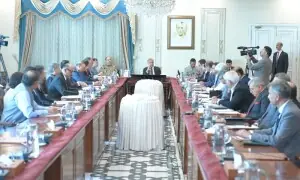
The issue about the future of CSF, according to a defence source, was discussed at the 23rd Defence Consultative Group Meeting (DCG)-Interim Progress Review (IPR) held at the defence ministry on Tuesday. Principal Deputy Secretary of Defence Ms Kelly Magsamen led the US delegation comprising officials of the defence and state departments.
Under the CSF arrangement, the US reimbursed Pakistan for operations and maintenance costs incurred in direct support of its operations in Afghanistan. Since 2001, the US has reimbursed $13 billion to Pakistan, which is the largest recipient of the fund.
Know more: Pakistan gets $336m in Coalition Support Fund, foreign reserves climb to $19bn
The arrangement was supposed to end with the completion of the drawdown in December 2014, but the US government through legislation extended the programme for another year. The extended programme, which came with extra conditions, allowed reimbursement of up to $1bn.
At the DCG meeting Pakistan sought its further extension due to continuing challenges. Besides helping in meeting security expenses, the government has been using CSF inflows to narrow down current account deficit.
A source said the US unwillingness to continue the programme was because of its changing priorities as it appeared more focused on the challenges posed by Middle Eastern terror group Daesh.
Speaking at the forum, Defence Secretary retired Lt Gen Alam Khattak emphasised on the importance of Pakistan in the regional security and said: “Pakistan is at the frontline fighting for the stability of the region. … Pakistan’s armed forces are committed to flushing terrorists out of the area by continuing operation Zarb-i-Azb.”
Pakistan, according to the source, needs sustained assistance for continuation of operations as well as rehabilitation of the displaced people. About two million people have been displaced because of counter-militancy operations and they are now being rehabilitated at a cost of Rs100bn.
Rehabilitation of IDPs technically does not come under the activities mandated under the CSF, but Pakistani officials use this argument to strengthen their case for continuation of the programme.
Pakistan had in 2014 lobbied for conversion of the CSF into a ‘Stability Support Fund’ after changing some of its parameters. The US administration initially looked convinced about the proposal, but it couldn’t materialise due to Pakistan government’s failure to pursue the matter at the political level. Additionally, the source said, the US needed to realise that Daesh was also posing a serious threat to this region.
According to a defence ministry’s statement on the meeting, the US delegation agreed that Pakistan was a stabilising factor in the region following the drawdown of coalition forces and was contributing to efforts for peace in the region.
It said the participants of the meeting were hopeful that “outstanding issues related to defence cooperation between USA and Pakistan” would soon be resolved. But the statement did not say what the outstanding issues were.
Published in Dawn, August 12th, 2015
On a mobile phone? Get the Dawn Mobile App: Apple Store | Google Play